Best Tools to Convert Embroidery Files for Bernina Embroidery Machine
Discover the best tools to convert embroidery file for Bernina embroidery machine. Compare ARTlink 9, professional software, and digitizing services for flawless results
 absolutedigitizing1
You have an embroidery design you love. Maybe you bought it online, or a friend shared it with you. It looks perfect on screen. You load it onto a USB stick, plug it into your Bernina, and hit start. Nothing happens. Or worse, the machine starts stitching with the wrong colors. Before you blame the machine, know this: your Bernina is not being difficult. It just needs files in the right format with all the right companion files. Finding the best tools to convert embroidery file for Bernina embroidery machine saves you from this frustration forever.
Bernina machines are precision instruments known for exceptional stitch quality. But they have specific requirements when it comes to file formats. They need EXP files with companion INF and BMP files to display colors correctly . This guide walks you through the best tools available, from free software to professional services, so you can convert with confidence.
Understanding What Your Bernina Machine Needs
Let us start with the basics. Bernina embroidery machines use EXP as their primary stitch format . But here is the catch. When you properly export a design for Bernina, you actually get three files.
The EXP file contains the stitch data. This tells the machine where to put the needle, when to trim, and how to move.
The INF file stores thread color information. This tells the machine which colors go where and in what order. Without it, your machine still stitches the design but displays colors in default shades .
The BMP file provides a thumbnail preview. When you scroll through designs on your machine's touchscreen, you see these previews. Without the BMP, the machine might show a generic icon or blank.
All three files must be together on your USB stick for the design to display and stitch correctly . This is one of the most important things to understand about working with Bernina.
Modern Bernina machines also read other formats. The Bernina 990 user manual lists compatibility with BQM, HQF, PAT, PLI, QLI, TAP, SEW, PES, PEC, XXX, PCS, JEF, and DST formats . But EXP with its companion files is the native language that works best.
One Critical Detail About EXP Formats
Here is something that confuses many embroiderers. There are actually two types of EXP files floating around out there .
Melco EXP is a commercial format used in industrial machines. It contains stitch data but no color information. When you load a Melco EXP, your machine stitches the design but assigns whatever default colors are currently threaded .
Bernina USB EXP is the home machine format that does include color data through the companion INF file . When you are converting files or buying designs, make sure you are getting Bernina USB EXP, not Melco EXP.
This distinction matters. Using the wrong EXP type leads to color confusion and extra work at the machine.
Tool 1: BERNINA ARTlink 9 (Free)
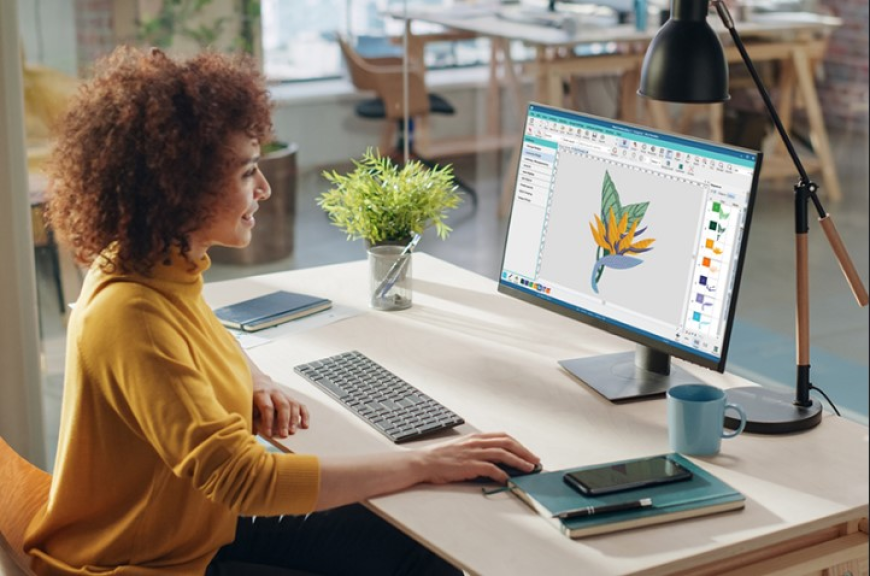
If you want a free tool that handles basic conversion and editing, BERNINA ARTlink 9 is your best friend. This is official software provided by Bernina specifically for editing and converting embroidery designs .
ARTlink 9 supports a wide range of embroidery file formats including EXP, DST, PES, PCS, JEF, HUS, and others . You can open designs created in other software and save them in formats your Bernina reads. The software runs on Windows systems including Windows 7, 8.1, and 10 .
What can you actually do with ARTlink 9?
Resize designs to fit your hoop. The hoop selection tool lets you choose from various hoop sizes based on your specific machine model, ensuring the design fits properly before you ever cut fabric .
Rotate and mirror designs for placement.
Combine multiple designs into one project.
Adjust thread colors using integrated charts from multiple manufacturers, ensuring your chosen threads match what the file expects .
Preview stitches with the simulation feature. ARTlink 9 shows you how the design will stitch out on fabric, letting you spot potential problems before wasting thread .
Send designs directly to your machine via USB or Wi-Fi if your model supports it .
The limitations are real. ARTlink 9 does not let you digitize new designs from scratch . You cannot create original artwork or manipulate individual stitches. It is strictly for editing and converting existing designs. For basic adjustments and format swapping, it is perfect.
The software is free to download from the Bernina website . That alone makes it worth trying before you consider other options.
Step-by-Step: Converting with ARTlink 9
Let us walk through a typical conversion using ARTlink 9.
Step 1: Download and install ARTlink 9 from the Bernina website. The installation is straightforward and works on Windows systems .
Step 2: Open the software and click File > Open to load your design . ARTlink supports multiple formats, so whatever file you have, it likely opens.
Step 3: Make adjustments as needed. Use the resize tools to scale the design to fit your hoop. The hoop selection feature shows you which hoops accommodate the current size . You can rotate or mirror the design as needed.
Step 4: Check the thread colors. If the colors look wrong or you want to match a specific thread brand, use the color adjustment tools to swap them out .
Step 5: Use the stitch preview function. This simulates how the design will stitch on fabric . Watch carefully for any areas that look too dense, too sparse, or misaligned. The slow redraw option lets you see the stitch sequence play out .
Step 6: Select your hoop size again to confirm fit.
Step 7: Send the design to your machine via USB or direct connection . If your machine connects via USB, save the file to a stick formatted in FAT32. Make sure you copy the EXP file along with any companion BMP and INF files .
Step 8: Test stitch on scrap fabric matching your final material. Watch for thread breaks, puckering, or misalignment. If problems appear, note them and consider whether the file needs further adjustment or professional help.
Tool 2: Bernina Embroidery Software 9 (Professional)
If you plan to digitize frequently and want complete creative control, Bernina Embroidery Software 9 is the official paid solution. This is the full-featured software that lets you create original designs from scratch.
The software includes complete digitizing tools. You import images, trace them manually, assign stitch types, set densities, add underlay, apply pull compensation, and export directly to EXP with all companion files.
It integrates perfectly with Bernina machines and ensures guaranteed compatibility. If the software exports EXP, your Bernina reads that EXP perfectly with all color information intact.
The downside is cost and learning curve. This is professional-grade software with a professional price tag. Mastering it takes time and practice. But for serious digitizers and businesses that create their own designs daily, it is the ultimate tool.
Tool 3: Third-Party Professional Software
Several third-party programs work well with Bernina formats and offer different price points and features.
Wilcom Hatch Embroidery runs on both Windows and Mac and supports EXP export . It includes auto-digitizing, manual editing, and photorealistic previews. The 2026 version introduced Multi Blend for blending stitch types and colors across layers . Hatch is popular among small businesses and serious hobbyists.
Embrilliance takes a modular approach and runs natively on Mac. You buy the base platform, then add modules as you need them. This keeps costs manageable while letting you expand over time. The StitchArtist modules let you digitize from scratch and export to EXP.
Ink/Stitch is a free plugin for Inkscape that supports EXP export . It includes basic digitizing tools and is great for hobbyists willing to learn. The learning curve is steep, but the price is right. Real users confirm they create working files for their machines.
TrueSizer Web from Wilcom offers free online viewing and conversion for basic format changes . It maintains stitch density when resizing and works from any browser. It is not a full digitizing tool, but for quick conversions, it works.
Tool 4: Professional Digitizing Services
Here is the honest truth. Sometimes the best tool is not software at all. Professional digitizing services employ experienced digitizers who understand Bernina machines and embroidery techniques .
You upload your design to a service like Absolute Digitizing. You specify that you need a Bernina-ready EXP file with all companion files. You pay a small fee, typically $10 to $15 per design . Within hours, you receive a production-ready file with EXP, INF, and BMP all included.
What did they do? A human digitizer analyzed your image and made hundreds of decisions. They chose stitch types for each area. They set density based on typical fabric needs. They added underlay to prevent shifting. They applied pull compensation so elements stay shaped correctly. They sequenced colors for efficient production. They tested the file in simulation software before sending it .
For business owners producing client work, this is often the smartest path. Your time is valuable. Your brand reputation matters. Paying a small fee for guaranteed quality beats spending hours learning digitizing only to produce inconsistent results.
Professional digitizers offer free unlimited edits until you are completely satisfied. Many even provide a money-back guarantee, showing confidence in their work .
The Three-File Secret for Bernina Success
Let me emphasize this because it is the most common source of confusion. When you convert files for Bernina, you need all three files together.
The EXP file is the stitch data. Without it, nothing stitches.
The INF file contains color information. Without it, your machine displays default colors and you have to manually set colors at the machine.
The BMP file provides the thumbnail preview. Without it, your machine screen shows a generic icon.
When you transfer designs to your machine, copy all three files to your USB stick . Keep them together in the same folder. The machine expects them to be present and uses them to display and stitch correctly.
This is one reason professional services are valuable. They deliver complete file packages with all components intact, not just the stitch data.
Common Conversion Mistakes to Avoid
Using the wrong EXP format. Melco EXP and Bernina USB EXP are different. Make sure you are getting the right one.
Skipping the INF file. Without it, you lose color information and have to manually set colors.
Resizing too much. The Bernina manual notes you can resize up to 20 percent without quality loss . Beyond that, stitches stretch or compress in ways that ruin the design.
Forgetting to test. Screen previews lie. Only real fabric reveals truth. Test every new design on scrap material before stitching final products.
Using free online converters. These often strip companion files, change density arbitrarily, and produce poor results. For anything that matters, avoid them.
Which Tool Should You Choose?
Your choice depends on your situation.
If you need to convert existing designs and want a free, reliable tool, BERNINA ARTlink 9 is perfect. It handles basic edits and format conversion with official support.
If you plan to digitize frequently and want complete creative control, Bernina Embroidery Software 9 or Wilcom Hatch gives you professional tools. The investment pays off over many designs.
If you are a Mac user who wants native software, Embrilliance offers a modular approach that runs well on Apple computers.
If you are a hobbyist on a budget, Ink/Stitch offers a free path forward. But be prepared for a learning curve.
If you need guaranteed quality for important projects, professional digitizing services are your best bet. At $10 to $15 per design, you skip the learning curve and get expert results every time .
Conclusion
Converting embroidery files for your Bernina machine does not have to be complicated. The key is understanding what your machine needs: EXP files with companion INF and BMP for color information and previews.
Start with the free BERNINA ARTlink 9 software for basic editing and format conversion. It handles most everyday tasks and costs nothing. For designs that need more than basic adjustments, or for guaranteed professional results, hire a reputable digitizing service. They deliver optimized files with all three components intact.
Remember the details that matter. EXP with accompanying INF and BMP files for proper color display. Proper stabilizer selection for your fabric. Test stitches before production. And when in doubt, trust the professionals who do this every day.
Your Bernina machine is capable of beautiful embroidery. Feed it properly converted files with all the right companions, and it will reward you with flawless results project after project.