"We Finally Have Peaceful Nights": Australian Families Share How Autism Weighted Blankets Transformed Their Child's Sleep
Between 40 and 80 percent of children with autism experience significant sleep difficulties and for many Australian families, the answer has been found not in routines or supplements, but in the right weighted blanket. Autism weighted blankets deliver deep pressure stimulation that triggers serotonin release, reduces cortisol, and helps a child's nervous system finally settle into genuine, restorative rest. With the right weight, breathable bamboo fabric, and a design your child actually chooses, the Auteeze autism weighted blanket range is changing bedtime for Australian families — one peaceful night at a time.
 Auteeze
There is a particular kind of exhaustion that parents of children with autism know intimately. It is not just the exhaustion of a hard day; it is the exhaustion that comes from knowing that when the day ends, the hardest part is still ahead. Bedtime. The battle to settle a child whose nervous system simply won't switch off, no matter how consistent the routine, no matter how dark the room. If you are living this, this blog is for you. Because across Australia, families are quietly discovering that one change, the right autism weighted blanket, has shifted bedtime in ways nothing else could.
Why Children With Autism Struggle to Sleep
Sleep problems are not a minor side issue for autistic children. Research consistently shows that between 40 and 80 percent of children with autism experience significant sleep difficulties far higher than the general child population. And the consequences ripple into every part of the following day: emotional regulation, focus, learning, behavior, and family well-being.
The reasons are neurological. Many children with autism have lower natural melatonin production, making it harder for the body to signal that it is time to sleep. They may also experience heightened sensory sensitivity that keeps the nervous system in a state of low-level alertness long after lights are out. The physical sensation of being in bed, the sheets, the temperature, and even the feeling of stillness can be enough to keep a sensory-sensitive child awake long past when they should have drifted off.
What Deep Pressure Stimulation Does for an Autistic Child's Nervous System
This is where autism weighted blankets address something that no routine or supplement alone can reach. When a weighted blanket is placed over the body, it delivers what occupational therapists call deep pressure stimulation, a form of firm, evenly distributed tactile input that activates the parasympathetic nervous system.
The effect is physiological, not psychological. Deep pressure stimulation triggers the release of serotonin, the chemical responsible for a calm and stable mood, which the body then converts into melatonin, supporting natural sleep onset. It also reduces cortisol, the stress hormone that keeps the body alert, and activates the proprioceptive system, which helps children with autism feel grounded and physically settled in their own body.
For children who cannot tolerate being held or hugged — common among autistic children — a weighted blanket provides this same calming input on their own terms, in their own time, without social demand.
What Australian Families Are Actually Experiencing
The research gives us the mechanism. But it is the real-world experiences of Australian families that tell the fuller story.
"He Goes to Bed Willingly Now: That Never Happened Before"
For many parents, the most striking change is not just that their child sleeps better, it is that bedtime itself becomes manageable. One Australian mother of a seven-year-old with autism describes the shift simply: her son, who had fought bedtime every single night for years, now walks to his room, pulls his weighted blanket over himself, and settles within minutes.
Verified Auteeze customers share similar accounts. One parent wrote, "I never realized how much difference a weighted blanket could make until we got one for our son. He has autism, and this blanket has helped him relax and sleep better than ever. The quality is outstanding, and the bamboo material is so soothing."
Another described the bamboo weighted blanket as a lifesaver for her daughter who struggles with sensory issues, noting that the weight felt just right and that she sleeps more soundly now than she ever had before.
Why Fabric Makes the Difference for Sensory-Sensitive Children
Parents who have tried weighted blankets before and found them unhelpful often point to the same issue: the blanket made their child overheat, and the discomfort outweighed the calming effect. This is one of the most common reasons weighted blankets for kids fail to deliver, particularly in Australia's warm climate.
Auteeze autism weighted blankets are made from 100 percent bamboo, naturally breathable, hypoallergenic fiber with a micro-gap structure that actively regulates temperature rather than trapping heat. For a child whose sensory system already notices everything, the difference between a fabric that stays cool and one that heats up against the skin is the difference between a blanket they keep on all night and one they kick off by 10pm.
Every Auteeze blanket carries OEKO-TEX® Standard 100 Class 1 certification, the highest textile safety standard available, tested across more than 100 harmful substances and approved to baby-product level. For parents who are understandably careful about what touches their child's skin all night long, that certification matters.
Choosing the Right Autism Weighted Blanket for Your Child
Getting the Weight Right From the Start
Occupational therapists recommend choosing a weighted blanket for kids that equals approximately ten percent of the child's body weight. This guideline exists because the calming effect of deep pressure stimulation depends on appropriate resistance: too little weight delivers insufficient input, while too much can feel restrictive and uncomfortable.
Auteeze offers autism weighted blankets from 2 kg through 9 kg across two size options, giving Australian families a clear and accessible range to work with. Starting at the lower recommended weight and observing your child's response over a week or two is always the sensible approach, particularly for children who are new to weighted blankets and may need time to adjust to the sensation.
Choosing a Design Your Child Will Actually Use
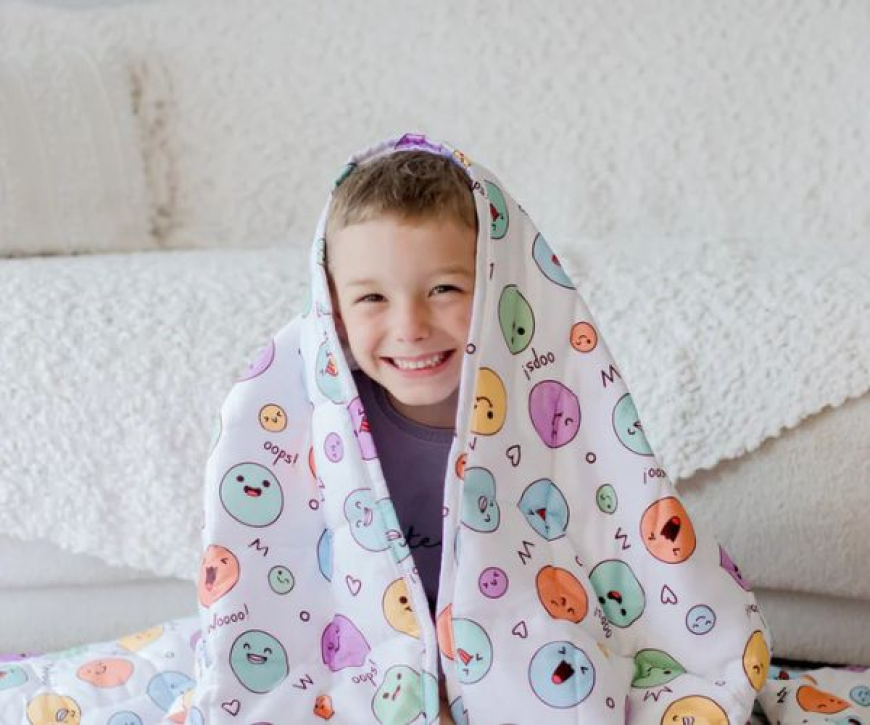
For children with autism, buy-in matters enormously. A blanket chosen by the child, one that reflects something they love, is far more likely to become a consistent, trusted part of their bedtime routine. Auteeze offers its range in designs, including playful emoji patterns; native Australian animals in the koala and kangaroo range; and bold jungle motifs that appeal to children with a love of adventure and nature.
When a child looks at their blanket and feels a sense of ownership over it, the emotional association with bedtime begins to shift before the deep pressure even has a chance to work.
The Night That Changes Everything
Every parent who has found their way to the right autism-weighted blanket remembers the first night it worked. The child who settled within twenty minutes instead of two hours. The house that went quiet at eight-thirty instead of eleven. The morning that started with a calmer child and a parent who had actually slept.