Assembly Fixtures in Automotive Manufacturing: Key Applications
Discover the importance of assembly fixtures in automotive manufacturing. Learn how they improve precision, speed, and quality in modern vehicle production.
 eliannadaniel
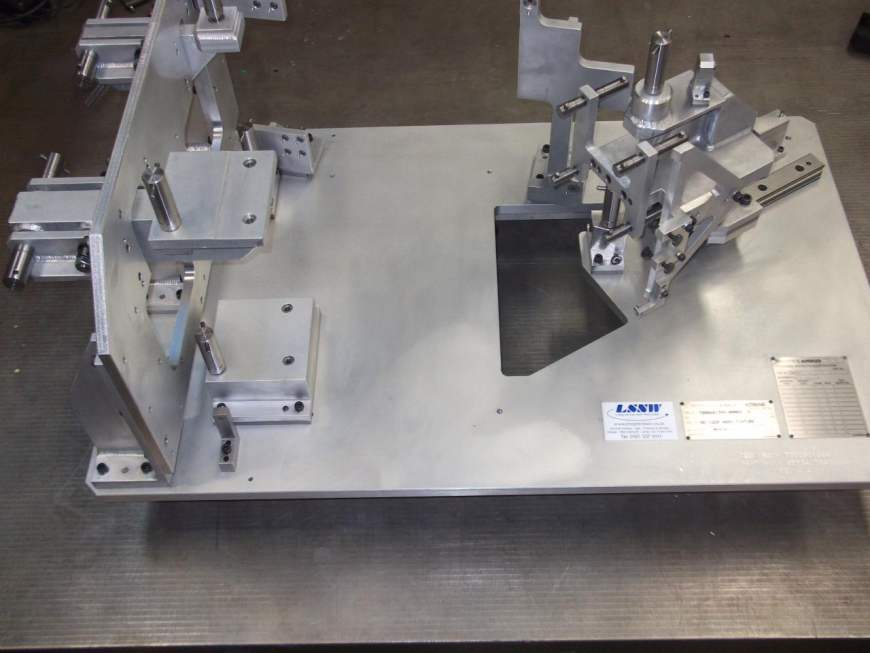
In the world of automotive manufacturing, precision, efficiency, and consistency are everything. Every car that rolls off the production line must meet exact standards, both in design and performance. One critical element that makes this possible is the assembly fixture—a specialized tool that ensures components are assembled accurately and efficiently.
If you’re looking to understand how Assembly Fixtures are revolutionizing automotive manufacturing, this guide explores their role, key applications, and benefits across the production process.
What Are Assembly Fixtures?
Assembly fixtures are custom-designed tools or devices used to hold, support, and align components during the manufacturing and assembly process. They ensure each part is positioned correctly, allowing for precise welding, drilling, joining, or inspection.
Unlike standard tools, fixtures are purpose-built for specific components, meaning they’re tailored to fit the exact geometry and requirements of each automotive part. In an industry where accuracy can make or break product quality, fixtures play a vital role in maintaining consistency and reducing production errors.
Why Assembly Fixtures Are Crucial in Automotive Manufacturing
Modern vehicle production involves assembling thousands of components—from chassis and panels to engine parts and interior systems. Without reliable fixtures, achieving alignment and consistency at this scale would be nearly impossible.
Here’s why assembly fixtures are so important:
-
Enhanced Accuracy: Fixtures ensure parts are held in the exact position needed for machining or joining.
-
Repeatability: They guarantee consistent results across thousands of units.
-
Increased Efficiency: By reducing manual setup and alignment, fixtures save time and improve production flow.
-
Improved Safety: They minimize the risk of errors or accidents during assembly.
Automotive manufacturers depend on precision fixtures to maintain quality standards and meet production demands efficiently.
Types of Assembly Fixtures Used in the Automotive Industry
Automotive production uses a wide range of assembly fixtures, each designed for specific operations. Let’s break down the main types:
1. Welding Fixtures
Welding fixtures are used to hold metal components in place during welding. In automotive assembly lines, they ensure that panels, chassis parts, and frames are accurately aligned for spot, MIG, or TIG welding.
These fixtures are often automated, integrating robotic systems for consistent weld quality.
2. Checking Fixtures
Also known as inspection fixtures, these tools are designed to verify that manufactured parts meet design specifications. They help ensure that components like body panels or structural parts are within the required tolerances before moving to the next stage of production.
3. Clamping Fixtures
Clamping fixtures are essential for holding parts securely during machining, cutting, or drilling operations. They prevent vibration or movement, ensuring a flawless finish and maintaining dimensional accuracy.
4. Assembly Jigs
Though similar to fixtures, jigs guide tools like drills or welding torches along a set path. They’re particularly useful in processes that require repeated precision, such as installing holes or fasteners in vehicle body panels.
5. Robotic Fixtures
With automation becoming the norm in modern automotive manufacturing, robotic fixtures have emerged as a critical innovation. They work hand-in-hand with robotic arms, automatically positioning and securing components for high-speed, high-precision operations.
Key Applications of Assembly Fixtures in Automotive Manufacturing
Assembly fixtures have a wide range of applications throughout the automotive production process. Here are some of the most significant uses:
1. Body-in-White (BIW) Assembly
The BIW stage is where the car’s metal body structure is assembled before painting. Fixtures play a vital role here, ensuring panels, roofs, doors, and chassis components are aligned perfectly before welding.
Precision at this stage determines the vehicle’s final fit, finish, and safety. A misaligned panel or joint can lead to major quality issues down the line.
2. Engine Assembly
In engine manufacturing, assembly fixtures ensure every component—from pistons and crankshafts to cylinder heads—is correctly positioned for assembly. They maintain tight tolerances and alignment, which is essential for engine performance and efficiency.
3. Interior and Trim Installation
Fixtures also come into play when installing dashboards, seats, and interior panels. They help align and secure components, ensuring that every part fits seamlessly and meets ergonomic standards.
4. Welding and Joining Operations
Automated welding lines rely heavily on fixtures to hold components in place while robots perform welding operations. This guarantees strong joints, accurate alignment, and consistent results across every vehicle.
5. Quality Inspection and Testing
Inspection fixtures help ensure that finished components meet specifications before moving forward. They can measure gaps, surface alignment, and dimensions—providing manufacturers with quality assurance at every stage.
The Role of Automation in Fixture Design
Automation is transforming how assembly fixtures are used and designed in the automotive industry. Modern fixtures are no longer just static tools—they’re integrated into smart manufacturing systems that communicate with robots, sensors, and software.
Key automation trends include:
-
Sensor Integration: Fixtures equipped with sensors can monitor part placement and detect deviations in real-time.
-
Modular Fixtures: These can be reconfigured quickly to accommodate different models or components, reducing downtime.
-
Digital Twins: Virtual simulations of fixtures allow manufacturers to test designs and processes before physical implementation.
With automated and intelligent fixtures, manufacturers can increase speed and reduce errors without sacrificing precision.
Benefits of Using Advanced Assembly Fixtures
The advantages of using advanced assembly fixtures in automotive production go beyond just accuracy. They also enhance efficiency, reduce costs, and ensure long-term reliability.
1. Improved Productivity
Fixtures streamline production by reducing manual adjustments, enabling faster setup times, and increasing output.
2. Consistent Quality
Every component produced using a fixture is identical, maintaining uniformity and ensuring that each vehicle meets high-quality standards.
3. Reduced Waste and Rework
By preventing alignment and measurement errors, fixtures reduce material waste and costly rework.
4. Enhanced Worker Safety
Fixtures eliminate the need for manual handling of heavy components, minimizing workplace injuries.
5. Scalability for Mass Production
Fixtures allow manufacturers to replicate precision across high-volume production lines, ensuring each vehicle meets the same specifications.
Custom-Built vs. Standard Fixtures
In the automotive industry, manufacturers often face the choice between custom-built and standard fixtures.
-
Custom Fixtures: Designed specifically for a particular part or assembly line. They offer unmatched precision and efficiency but can be more expensive to design and produce.
-
Standard Fixtures: Suitable for smaller operations or low-volume production runs. They’re less costly and faster to implement but may not deliver the same level of accuracy.
For large-scale manufacturers, working with a specialist like Expert Technologies Group ensures custom fixture solutions that align perfectly with production goals and product requirements.
Challenges in Fixture Design and Implementation
While assembly fixtures bring numerous benefits, they also come with challenges:
-
High Initial Cost: Designing and manufacturing fixtures require upfront investment.
-
Maintenance Requirements: Regular calibration and maintenance are necessary to preserve accuracy.
-
Design Complexity: Fixtures must be designed with precision to fit perfectly with complex automotive components.
Overcoming these challenges often requires collaboration between engineers, designers, and automation experts to create reliable and efficient systems.
The Future of Assembly Fixtures in Automotive Manufacturing
The future of automotive manufacturing is undeniably digital, and fixtures are evolving right alongside it. Emerging technologies are making fixtures smarter, faster, and more adaptive.
1. Smart Fixtures with IoT Integration
Future fixtures will include built-in sensors and connectivity features, allowing them to monitor performance and send data in real-time for predictive maintenance.
2. 3D Printing for Fixture Development
3D printing is revolutionizing how fixtures are designed and produced, enabling faster prototyping and reduced lead times.
3. AI and Machine Learning Applications
AI-driven analysis can optimize fixture design and predict potential faults, improving both quality and efficiency.
As automotive production shifts toward electric vehicles (EVs), flexible fixtures capable of adapting to new designs will become even more critical.
Conclusion: The Backbone of Automotive Precision
Assembly fixtures are the unsung heroes of automotive manufacturing. They ensure that every component—big or small—is perfectly aligned, assembled, and inspected with precision. From welding body panels to testing engine components, fixtures make mass production possible without compromising on quality or safety.