Air Track Maintenance Tips: How to Make It Last Longer
Learn the best Air Track maintenance tips to extend its lifespan. Discover cleaning, storage, inflation, and care practices that keep your mat safe, durable, and performing like new.
 airtumble
An inflatable gymnastics mat is a valuable investment for athletes, coaches, and families who want a safe and reliable training surface. Whether used for gymnastics, cheerleading, dance, or general fitness practice, proper care can significantly extend its lifespan and maintain its performance. Many users focus on selecting the right mat but overlook the importance of maintenance. With a few simple habits, you can keep your equipment in excellent condition for years.
This guide covers practical maintenance tips that will help protect your investment, prevent unnecessary damage, and ensure consistent performance.
Why Regular Maintenance Matters
Like any piece of sports equipment, inflatable training mats experience wear and tear over time. Repeated jumping, tumbling, rolling, and storage can gradually affect the material if proper care is not taken.
Routine maintenance helps:
-
Preserve bounce and performance
-
Prevent air leaks and seam damage
-
Improve safety during training
-
Reduce repair costs
-
Extend overall product lifespan
According to guidance from AirTumble, consistent cleaning, proper storage, and regular inspections are among the most effective ways to keep inflatable gymnastics equipment performing like new for years.
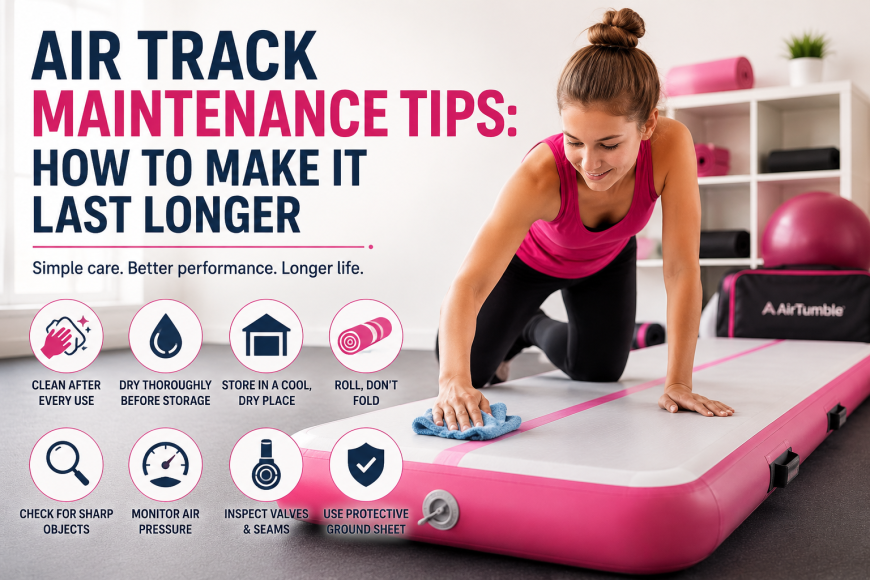
Clean the Surface After Every Use
One of the simplest yet most important maintenance practices is regular cleaning. During training sessions, sweat, dust, dirt, and debris accumulate on the surface. If left untreated, these contaminants can gradually affect the material and reduce grip.
After each session:
-
Wipe the surface with a soft cloth
-
Use mild soap and warm water when necessary
-
Remove dust, dirt, and sweat residue
-
Avoid abrasive brushes or harsh cleaning chemicals
Strong cleaners, bleach, and solvent-based products can damage the PVC material and shorten the life of your Air track. Gentle cleaning products are always the safest choice.
A quick cleaning routine only takes a few minutes but can make a significant difference over the long term.
Always Dry Before Storage
Moisture is one of the biggest threats to inflatable training equipment. Even small amounts of trapped moisture can weaken seams, create unpleasant odors, and encourage mold growth.
Before packing away your mat:
-
Ensure the entire surface is dry
-
Pay special attention to corners and seams
-
Allow extra drying time after outdoor use
-
Never roll up equipment while damp
AirTumble recommends drying equipment completely before storage because long-term moisture exposure can affect seam durability and overall performance.
Store It in the Right Environment
Proper storage is just as important as proper cleaning. Extreme temperatures and direct sunlight can gradually degrade the material and affect air retention.
Ideal storage conditions include:
-
Cool and dry indoor spaces
-
Areas away from radiators and heaters
-
Protection from direct sunlight
-
Clean environments free from sharp objects
Avoid storing equipment in sheds, garages, or outdoor areas where temperatures fluctuate dramatically. Consistent indoor conditions help preserve material flexibility and structural integrity.
When not in use for extended periods, keeping the mat in its storage bag can provide additional protection against dust and accidental damage.
Roll Instead of Folding
Many owners unintentionally damage their equipment through improper storage methods.
Sharp folds create concentrated stress points that can weaken PVC material over time. Instead of folding, always roll the mat carefully.
The best method includes:
-
Fully deflate the mat.
-
Smooth out any trapped air.
-
Roll evenly from one end.
-
Avoid creating hard creases.
-
Secure the roll before storing.
Rolling distributes pressure more evenly and helps preserve the structure of the material.
Check for Sharp Objects Before Every Session
Prevention is always better than repair.
Before setting up for practice, inspect the training area thoroughly. Small objects such as stones, glass fragments, sticks, or sharp debris can puncture the surface.
If training outdoors:
-
Use a protective groundsheet
-
Remove stones and twigs
-
Choose flat, level surfaces
-
Avoid rough concrete when possible
Indoor users should also inspect floors regularly for screws, sharp edges, or damaged flooring.
These simple checks can prevent expensive repairs and unexpected interruptions to training.
Monitor Air Pressure Regularly
Maintaining the correct inflation level is essential for both performance and longevity.
Overinflation can place unnecessary stress on seams and valves, while underinflation may reduce stability and increase wear.
Check air pressure regularly and adjust it according to:
-
User weight
-
Training activity
-
Manufacturer recommendations
-
Environmental temperature
Remember that air naturally expands in warm conditions and contracts in cooler temperatures. Slight pressure adjustments throughout the year are completely normal.
A properly inflated Air track delivers better bounce, improved safety, and reduced strain on internal components.
Inspect Valves and Seams Frequently
Valves and seams are critical components that should be inspected regularly.
At least once a month, check for:
-
Loose valves
-
Small punctures
-
Surface scratches
-
Seam separation
-
Air loss during storage
If you notice gradual deflation, the issue may simply be a loose valve rather than a puncture.
Many modern repair kits include valve tools and repair patches that make minor fixes quick and straightforward.
Addressing small problems early prevents them from becoming major repairs later.
Protect It During Outdoor Use
Outdoor training can be enjoyable, but it exposes equipment to additional risks.
Sunlight, moisture, and rough surfaces all contribute to accelerated wear.
To reduce outdoor damage:
-
Use a protective groundsheet
-
Avoid prolonged UV exposure
-
Keep away from standing water
-
Deflate slightly during extreme heat
-
Store indoors after use
UV rays can gradually weaken materials and affect color appearance over time. Limiting direct sun exposure helps preserve both appearance and durability.
Use Equipment Only for Its Intended Purpose
One common cause of premature wear is misuse.
Inflatable gymnastics mats are designed specifically for training activities. Using them for unrelated purposes may damage seams, valves, or the outer surface.
Avoid:
-
Dragging heavy furniture across the surface
-
Allowing pets with sharp claws on the mat
-
Using shoes with rough soles
-
Jumping with sharp objects in pockets
-
Exceeding recommended weight limits
Following manufacturer guidelines helps maximize product lifespan while maintaining safety.
Create a Simple Maintenance Schedule
The easiest way to keep equipment in top condition is to establish a routine.
After Every Use
-
Wipe clean
-
Check for debris
-
Allow to dry
Weekly
-
Inspect surface condition
-
Check inflation levels
Monthly
-
Examine seams and valves
-
Test air retention
-
Clean thoroughly
Seasonally
-
Review storage conditions
-
Inspect repair kit supplies
-
Perform a detailed overall inspection
A consistent maintenance schedule prevents small issues from becoming costly problems.
Conclusion
Proper maintenance is the key to maximizing the lifespan of your inflatable gymnastics equipment. Simple habits such as cleaning after use, drying thoroughly, storing correctly, monitoring air pressure, and inspecting for damage can dramatically improve durability and performance.
A well-maintained Air track not only lasts longer but also provides a safer and more enjoyable training experience. By following these maintenance tips and adopting a regular care routine, athletes and families can protect their investment and enjoy years of reliable use.
FAQs
1. How often should I clean an Air track?
Light cleaning should be performed after every use, while a deeper cleaning can be done monthly or whenever visible dirt accumulates.
2. Can I leave my mat inflated all the time?
Yes, but it should be stored indoors and checked regularly for proper air pressure and environmental conditions.
3. What cleaning products are safe to use?
Mild soap and warm water are generally recommended. Avoid bleach, solvents, and abrasive cleaners.
4. How can I find a slow air leak?
Inspect valves first, then use soapy water around seams and suspected areas to identify escaping air bubbles.
5. How long can a properly maintained mat last?
With correct care, storage, and regular inspections, high-quality inflatable gymnastics mats can remain in excellent condition for many years.