Aesthetic Revolution on the Dining Table: Decoding the Popular Code of Contemporary dining furniture
As the protagonist of spatial narrative, dining furniture is undergoing a profound transformation from functional orientation to emotional resonance, and its design language reflects a new understanding of life aesthetics in the era.
 linyunyu
Aesthetic Revolution on the Dining Table: Decoding the Popular Code of Contemporary dining furniture
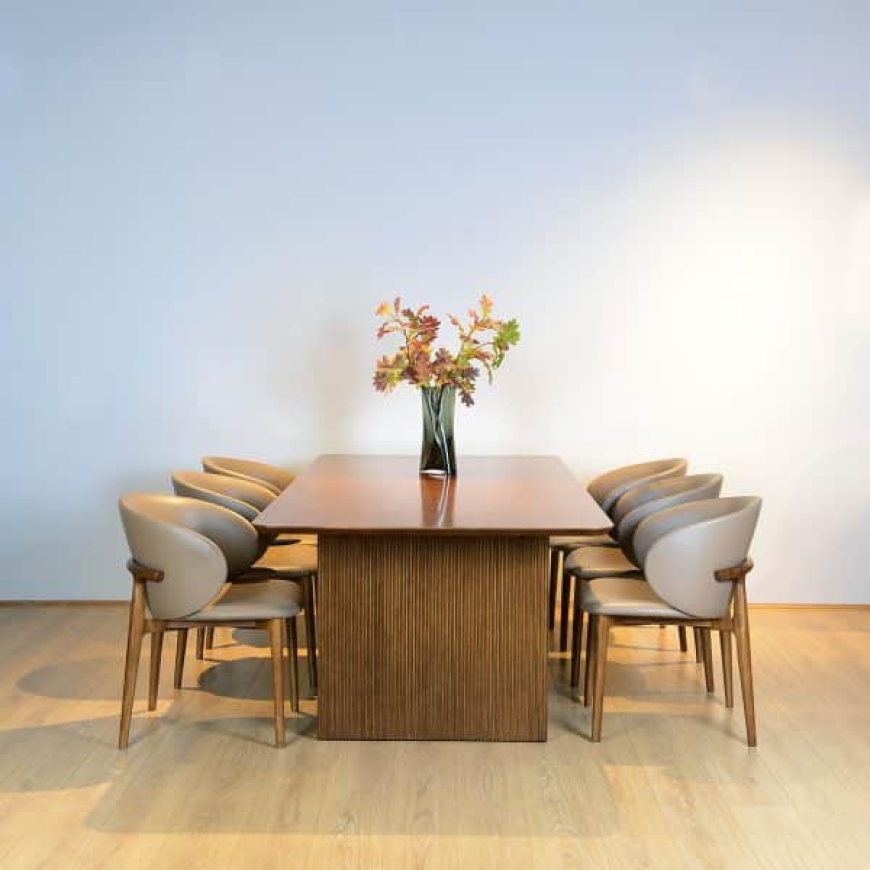
Under the dual drive of consumption upgrading and aesthetic awakening, contemporary restaurants have long broken through the single function of being a "place to eat" and evolved into a spiritual field that carries a sense of ritual in life. As the protagonist of spatial narrative, dining furniture is undergoing a profound transformation from functional orientation to emotional resonance, and its design language reflects a new understanding of life aesthetics in the era.
Visual symphony of mixed materials in dining furniture
The material application of modern dining furniture has long broken through traditional frameworks, forming a diverse dialogue of metal, wood, stone, and glass. The warm texture of walnut wood and the cool luster of the brass bracket create a subtle balance, while the natural texture of the marble countertop complements the transparency of the acrylic chair legs. The cross-border combination of this material not only creates rich visual layers, but also stimulates diners' sensory experience through the collision of different tactile sensations.
At a concept restaurant in Ginza, Tokyo, the designer spliced recycled ship wood and stainless steel into a dining table. The rough wood grain contrasts strongly with the mirrored metal, retaining the original charm of natural materials while injecting a modern industrial design. This kind of "harmony in imperfection" is becoming a new aesthetic trend in high-end dining furniture, implying contemporary people's deep thinking about the relationship between nature and technology.
The gentle revolution of ergonomics in dining furniture
Comfort has become a core indicator in dining furniture design. Designers create a sitting experience that is almost "hugging" by precisely calculating the curvature of the backrest, the depth of the seat surface, and the legroom. The dining chair launched by a Nordic brand features a memory sponge cushion and adjustable lumbar support, combined with a slightly tilted back design, which can maintain the natural curve of the spine even when sitting for a long time. This ultimate pursuit of ergonomics elevates dining from physiological needs to the enjoyment of physical and mental relaxation.
The design of the dining table height also hides mysteries. Modern restaurants generally adopt a standard height of 72-76 centimeters, combined with a chair height of 28-32 centimeters, to form a scientific dining ratio. Some designers have broken through tradition by introducing adjustable dining tables that seamlessly switch between sitting and standing positions through electric or hydraulic devices, meeting the new demand for healthy eating.
The versatile forms of the Rubik's Cube in dining furniture space
In the urban environment where every inch of land is valuable, dining furniture exhibits astonishing spatial adaptability. The foldable dining table is designed with hidden hinges, which can be unfolded to standard size during dining and folded into a cabinet thickness during leisure time; The modular seating system allows users to freely combine according to the number of people, easily switching from two person secret conversations to ten person gatherings. This kind of "transformation like" design wisdom allows even small-sized restaurants to have a spacious and relaxed atmosphere.
The circular telescopic dining table launched by an Italian brand can be regarded as a model of spatial magic: it is usually used as a round table with a diameter of 1.2 meters. After unfolding the central fan-shaped plate, it instantly transforms into an elliptical table with a diameter of 1.8 meters. The hidden mechanical structure perfectly connects with the tabletop material, as if the space itself has the ability to grow. This design not only meets practical needs, but also gives the dining ceremony a dramatic sense of anticipation.
The subtle application of color psychology in dining furniture
The color selection of dining furniture has long surpassed the realm of aesthetics and become an invisible tool for regulating dining emotions. Warm colors such as ochre red and honey yellow can stimulate appetite and are suitable for use in family restaurants; Cold tones such as haze blue and gray bean green create a peaceful atmosphere and are more favored by cafes. A study shows that customers dining in orange environments have an average dining time extension of 15%, while blue environments make people pay more attention to the taste of the food itself.
High end restaurants are adopting the "color gradient" design technique, gradually transitioning from the calm blues in the entrance area to the warm orange color in the dining area, guiding customers' emotions through changes in color temperature. The color contrast between the chair and tabletop has also been carefully calculated - high contrast combinations (such as black tables with white chairs) are suitable for fast-paced light meal scenes, while low contrast combinations (such as beige tables with gray and pink chairs) can extend customer stay time.
Contemporary Translation of Cultural Symbols in dining furniture
In the context of globalization, dining furniture has become a special medium for cultural dialogue. Chinese restaurants have begun to reconstruct traditional elements using modern design language: the curves of the Grand Tutor's chair have been simplified into smooth metal lines, the square outline of the Eight Immortals table has evolved into a rotatable circular design, and blue and white porcelain patterns are presented on glass tabletops through 3D printing technology. This' traditional new interpretation 'not only satisfies modern aesthetics, but also continues cultural memory.
At Milan Design Week, a certain brand's "Japanese style dining table" attracted attention: the tabletop uses Japanese beech wood, retaining natural knots and textures; The design of the chair legs draws inspiration from the kneeling posture of the tea ceremony, forming a unique "semi kneeling" chair; Even the way tableware is placed follows tradition and dining etiquette. This attempt to transform cultural rituals into furniture language makes dining a cultural experience that transcends time and space.
When dining furniture breaks away from its simple functional attributes and evolves into a carrier of life aesthetics, it not only carries food and utensils, but also people's yearning for a quality life. From material selection to color matching, from ergonomics to spatial magic, every piece of dining furniture is telling a philosophical proposition about "how to live". In this sense, the trend of dining furniture is a visual representation of contemporary lifestyles - it reflects our past and guides the direction of the future.