Why Is a 3D Printing Prototype Service Important for Modern Manufacturing?
Manufacturing today is nothing like it was ten or twenty years ago. Product cycles are shorter, customer expectations are higher, and competition comes from every direction.
 Jacobluther
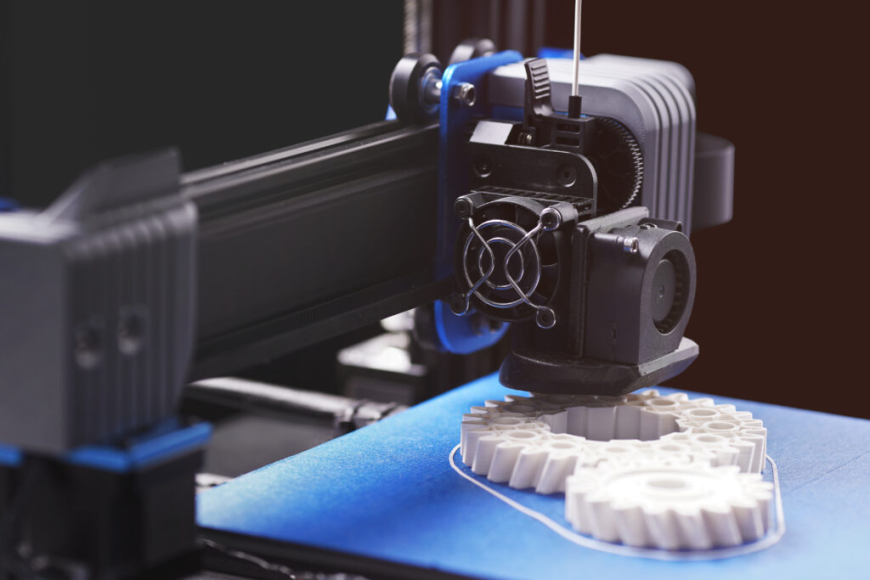
Manufacturing today is nothing like it was ten or twenty years ago. Product cycles are shorter, customer expectations are higher, and competition comes from every direction. Companies don't have the luxury of spending months developing a product only to discover a flaw after production begins.
That’s one reason a 3D printing prototype service has become such a valuable part of modern manufacturing. Businesses need ways to test ideas quickly, make adjustments, and move forward without wasting time or money. Speed matters. But accuracy matters too.
The ability to transform a digital design into a physical model within hours instead of weeks changes how products are developed. It gives engineers, designers, and manufacturers a practical way to validate concepts before making bigger commitments.
And honestly, in many industries today, working without rapid prototyping feels like working with one hand tied behind your back.
Turning Ideas Into Physical Products Faster
Every product starts as an idea. The challenge is getting that idea into a form people can actually evaluate. Sketches help. CAD models help more. But holding a real prototype in your hands is different.
A 3D printing prototype service allows teams to move from concept to physical model extremely fast. Instead of waiting for traditional tooling or machining processes, a prototype can often be produced within days, sometimes even the same day.
That speed creates opportunities. Designers can spot problems earlier. Engineers can test fit and functionality before production. Decision-makers can review actual models instead of relying entirely on screens and drawings.
When development teams can see and touch a product early in the process, better decisions tend to happen. It's a simple thing, but it makes a huge difference.
Reducing Product Development Costs
One of the biggest misconceptions about product development is that mistakes are expensive only during manufacturing. The truth is mistakes become expensive because they aren't discovered early enough.
A small design flaw caught during the prototyping stage may cost almost nothing to fix. The same flaw discovered after tooling, production, or shipping can cost thousands, sometimes much more.
This is where a 3D printing prototype service creates real value. It gives manufacturers the chance to identify issues before they become costly problems. Teams can test dimensions, ergonomics, assembly requirements, and overall functionality before investing heavily.
No company enjoys wasting resources. Prototyping helps reduce that risk. Not completely, of course. Nothing does. But it dramatically improves the odds of getting things right earlier.

Improving Product Design Through Iteration
Good products rarely appear fully formed on the first attempt. Most successful products go through multiple versions before reaching the market.
Traditional prototyping methods often made iteration slow and expensive. Every design change could mean additional tooling, machining, and delays. That limited experimentation.
With modern 3D printing technology, revisions happen much faster. Designers can modify a digital file, print an updated version, test it, and repeat the process again if necessary. Sometimes several design iterations can happen within a single week.
That flexibility encourages innovation. Teams become more willing to test ideas because the cost and time barriers are much lower than they used to be.
And that's often where the best improvements come from—not the first version, but the fifth or sixth.
Supporting Better Communication Across Teams
Manufacturing projects involve a lot of people. Engineers, designers, project managers, production teams, clients, and stakeholders all need to understand what is being built.
Unfortunately, technical drawings don't always communicate everything clearly. Even experienced professionals can interpret details differently.
A physical prototype solves many of those communication problems. When everyone can examine the same object, conversations become more productive. Feedback becomes more specific. Misunderstandings become easier to identify.
A 3D printing prototype service helps create that shared understanding early in the development process. Instead of debating what something might look like, teams can focus on improving what already exists in front of them.
Sometimes a prototype answers questions that hours of meetings never could.
Testing Functionality Before Full Production
Appearance matters, but functionality matters more. A product can look fantastic and still fail if it doesn't perform properly.
This is why prototype testing plays such an important role in manufacturing. Companies need to verify that components fit together correctly, mechanisms operate as intended, and user interactions feel natural.
Many modern 3D printing materials allow prototypes to closely resemble production parts. While they may not always match final manufacturing materials perfectly, they often provide enough accuracy for meaningful testing.
Being able to test products before committing to large production runs helps reduce uncertainty. It also gives teams confidence that they are moving in the right direction.
Confidence isn't everything, but it helps when big manufacturing decisions are involved.
Helping Manufacturers Stay Competitive
Markets evolve quickly. Customer preferences change. New competitors appear all the time.
Manufacturers that take too long to develop products often lose opportunities. By the time they reach the market, someone else may have already solved the same problem.
A 3D printing prototype service helps businesses shorten development timelines without sacrificing quality. Faster prototyping means faster testing, faster revisions, and ultimately faster product launches.
That speed creates a competitive advantage. Companies can respond more quickly to trends, customer feedback, and changing market demands.
In industries where timing can determine success or failure, shaving weeks or months off development schedules is a significant benefit.
Making Customization More Practical
Customers increasingly want products tailored to their specific needs. Whether it's medical devices, industrial equipment, consumer products, or specialized components, customization has become more important than ever.
Traditional manufacturing methods often struggle with low-volume customization because tooling costs can be difficult to justify.
3D printing changes that equation. Manufacturers can create custom prototypes efficiently without the same level of upfront investment. This allows companies to explore personalized solutions before moving into production.
The ability to test customized designs quickly also improves customer satisfaction. Adjustments can be made earlier, resulting in products that better match actual requirements.
That's something both manufacturers and customers appreciate.
Supporting Innovation Across Industries
The impact of 3D printing extends far beyond a single industry. Aerospace companies use it. Automotive manufacturers rely on it. Medical device developers use it extensively. Consumer product companies depend on it as well.
Innovation often requires experimentation. Experimentation requires prototypes.
A reliable 3D printing prototype service provides the foundation for that process. It allows organizations to explore new concepts, evaluate unconventional designs, and test ideas that may have been too expensive or time-consuming using traditional methods.
Not every experiment succeeds. That's normal. The important thing is being able to test ideas efficiently and learn from the results.
The companies that innovate consistently are usually the companies that learn quickly.

Preparing Products for Manufacturing Success
A prototype isn't the final product, but it plays a major role in determining whether the final product succeeds.
Manufacturing teams need confidence that designs can be produced efficiently. Engineers need confidence that specifications are accurate. Stakeholders need confidence that investments are justified.
By validating designs before production begins, 3D printing helps reduce uncertainty throughout the manufacturing process. Potential issues can be identified earlier, manufacturing considerations can be addressed, and product quality can improve before large-scale production starts.
That preparation creates smoother transitions from development to manufacturing. And smoother transitions usually mean fewer surprises later.
In manufacturing, fewer surprises are almost always a good thing.
Conclusion
Modern manufacturing demands speed, flexibility, and precision. Companies can no longer afford long development cycles filled with costly trial and error. A professional 3D printing prototype service helps bridge the gap between ideas and production by making testing, refinement, and validation faster and more affordable.
Whether the goal is reducing development costs, improving product quality, accelerating innovation, or staying competitive in a crowded market, rapid prototyping has become an essential tool rather than a luxury. The value of a well-executed 3D Printing Prototype extends far beyond creating a model—it helps manufacturers make smarter decisions, avoid expensive mistakes, and bring better products to market with greater confidence.