Complete Guide to Home Solar Systems
Learn how a solar system for home works, compare system types, understand installation and maintenance, evaluate costs, and choose the right provider for reliable long-term energy savings and performance.
 sigmapowertech
A residential township planning committee recently compared five proposals for installing rooftop solar across multiple apartment buildings. Although every quotation promised lower electricity bills, the engineering specifications varied considerably. Some designs overlooked future load growth, while others lacked advanced monitoring or proper electrical protection. The exercise demonstrated an important lesson: selecting a solar system for home requires much more than comparing prices. Long-term performance depends on thoughtful engineering, quality equipment, and professional installation.
With electricity costs continuing to rise across residential, commercial, and industrial sectors, solar adoption has become a practical investment rather than an emerging technology. A solar system for home offers long-term savings, improved energy independence, and reduced environmental impact. However, buyers should understand how solar systems work, how they are designed, and which technical factors influence long-term performance before making an investment.
Understanding a Solar System for Home
A solar system converts sunlight into electricity through photovoltaic (PV) panels. The generated direct current (DC) is converted into alternating current (AC) by an inverter, allowing the electricity to power household appliances and electrical systems.
Modern installations also include safety equipment, intelligent monitoring, and optional battery storage to improve reliability and operational efficiency. When designed correctly, these systems can operate efficiently for more than 25 years.
How a Solar System for Home Works
A professionally engineered solar system for home typically consists of:
- Photovoltaic solar panels
- Grid-tied or hybrid inverter
- Mounting structures
- DC and AC protection devices
- Earthing and lightning protection
- Smart monitoring platform
- Optional battery storage
Each component plays an important role in maximizing energy generation while maintaining electrical safety and operational reliability.
Choosing the Right Solar Panel Technology
Panel technology directly influences efficiency and long-term performance.
Monocrystalline panels provide high conversion efficiency and are well suited for limited roof space.
Polycrystalline panels offer dependable performance with competitive installation costs.
Thin-film panels remain suitable for selected industrial or architectural applications requiring lightweight construction.
Rather than choosing the best solar panels based only on brand recognition, buyers should compare efficiency, temperature performance, degradation rates, certifications, and warranty coverage.
Selecting the Right System Configuration
Every property has different electricity requirements.
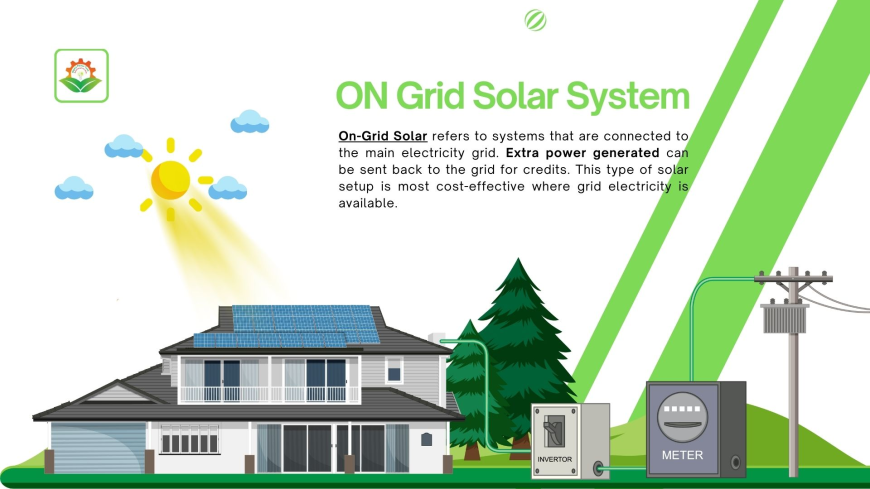
An on-grid rooftop solar system connects directly to the utility network and can export surplus electricity through net metering where regulations permit.
Off-grid systems use battery storage to operate independently of the utility network.
Hybrid systems combine battery storage with grid connectivity, providing backup power while maximizing renewable energy utilization.
Proper inverter selection and accurate load calculations ensure that the installation operates efficiently under varying electrical demand.
Features That Add Long-Term Value
Modern residential solar systems include several engineering improvements that enhance performance and simplify operation.
Important features include:
- High-efficiency photovoltaic technology
- Scalable system architecture
- Intelligent inverter management
- Real-time energy generation tracking
- Mobile application monitoring
- Remote access capability
- Grid synchronization
- Predictive maintenance support
- User-friendly monitoring dashboard
- Weather-resistant equipment
- Modular panel and inverter design
- Operational lifespan exceeding 25 years
These capabilities allow homeowners to monitor energy production continuously while identifying performance issues before they become significant.
Where Solar Systems Are Installed
Although residential demand continues to increase, solar technology supports a wide variety of applications.
Typical installations include:
- Residential rooftop systems
- Apartment and gated communities
- Commercial office buildings
- Hospitals and healthcare facilities
- Industrial manufacturing plants
- Shopping malls
- Educational institutions
- Hotels and hospitality facilities
- Government buildings
- Agricultural irrigation systems
- Warehouses and logistics centres
- Smart city and rural electrification projects
Every solar system project should be designed according to available installation space, electrical demand, and future expansion plans.
Factors That Influence Solar Panel System Cost
Instead of comparing only solar system for home price, buyers should evaluate the engineering factors that determine lifetime value.
Key considerations include:
- Available rooftop area
- Daily electricity consumption
- Solar panel technology
- Inverter capacity and manufacturer
- Battery storage requirements
- Installation and commissioning complexity
- Net metering approval
- Monitoring requirements
- Future scalability
- Site orientation and shading
- Compliance documentation
- Lifecycle operating costs
The overall solar panel system cost should always be assessed against expected energy generation, equipment lifespan, and long-term maintenance requirements.
Buyer's Guide: Choosing the Right Installation Partner
The quality of engineering directly affects system performance for decades.
Before selecting a provider, buyers should evaluate:
- Industry experience
- Completed residential and commercial projects
- Solar EPC engineering expertise
- Manufacturing and installation capabilities
- Product testing and quality assurance
- MNRE and BIS compliance
- Panel and inverter warranty coverage
- Customization options
- Technical documentation
- Installation and commissioning support
- Availability of solar panel maintenance services
- Annual maintenance contracts
- Long-term technical assistance
Engineering-focused providers, including those offering a Sigma Power Tech solar panel system, generally emphasize complete system performance, regulatory compliance, and lifecycle reliability rather than simply supplying equipment.
Common Mistakes Buyers Should Avoid
Many performance issues result from avoidable planning errors.
Common mistakes include:
- Skipping professional site assessments
- Ignoring future electricity demand
- Choosing equipment based only on upfront cost
- Underestimating roof shading and orientation
- Selecting incompatible inverter-panel combinations
- Neglecting grounding and electrical safety
- Ignoring net metering approvals
- Delaying preventive maintenance planning
- Failing to define energy-saving objectives
- Not learning how to use monitoring software after installation
Selecting the right solar system model through professional engineering analysis significantly improves long-term performance and return on investment.
Conclusion
Choosing a solar system for home is a long-term infrastructure decision that requires careful evaluation of engineering design, equipment quality, installation standards, and operational support. While solar system for home price and solar panel system cost remain important considerations, they should never outweigh system reliability, safety, regulatory compliance, and lifecycle performance.
Whether serving an individual residence, residential community, commercial building, or industrial facility, a professionally engineered solar system for home delivers dependable electricity generation, lower operating costs, and greater energy independence for decades. By understanding the technical fundamentals before investing, buyers can build a resilient, efficient, and sustainable energy solution that continues delivering value well into the future.