How to Identify Real Moldavite: A Buyer’s Guide for Authentic Stones in 2026
This guide explains how to identify real moldavite by focusing on key factors like origin, texture, and structure. Authentic Moldavite is a rare tektite glass formed from a meteorite impact and found mainly in the Czech Republic. Real pieces typically have natural surface etching, irregular shapes, and internal flow features, while fake Moldavite often looks smooth, uniform, and overly perfect. The content also highlights common buyer mistakes, such as ignoring origin details or choosing stones based only on appearance or price. It emphasizes the importance of buying from reliable, specialized sellers like Rare Moldavites, who provide transparency and real specimen information. Overall, the article helps buyers make informed decisions by understanding what genuine Moldavite looks like and how to avoid imitations in today’s market.
 Khabib
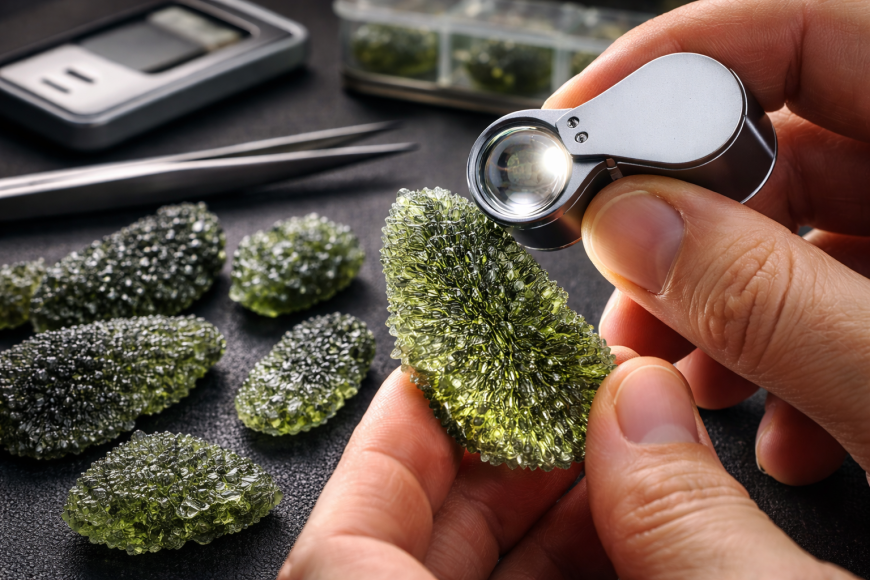
This guide explains how to identify real moldavite by focusing on key factors like origin, texture, and structure. Authentic Moldavite is a rare tektite glass formed from a meteorite impact and found mainly in the Czech Republic. Real pieces typically have natural surface etching, irregular shapes, and internal flow features, while fake Moldavite often looks smooth, uniform, and overly perfect.
The content also highlights common buyer mistakes, such as ignoring origin details or choosing stones based only on appearance or price. It emphasizes the importance of buying from reliable, specialized sellers like Rare Moldavites, who provide transparency and real specimen information.
Overall, the article helps buyers make informed decisions by understanding what genuine Moldavite looks like and how to avoid imitations in today’s market.s on real characteristics, practical observations, and buyer-focused insights.
What Is Moldavite and Why Is It Unique?
Before learning how to identify real Moldavite, it is important to understand what makes it different from ordinary materials.
Moldavite is a natural tektite glass formed approximately 14.8 million years ago during a meteorite impact event. When the meteor struck Earth, it generated intense heat that melted surrounding rock. This molten material was ejected into the atmosphere, cooled rapidly, and solidified into glass-like formations now known as Moldavite.
Because of this rare moldavite crystal origin, Moldavite has several defining features:
-
it is not mined like traditional gemstones
-
it forms irregular, organic shapes
-
each piece has a unique surface texture
-
it is found primarily in the Czech Republic
These characteristics are essential when determining authenticity.
Why Fake Moldavite Is So Common Today
One of the biggest challenges buyers face is the widespread availability of fake Moldavite. As interest in Moldavite has grown—especially in moldavite jewelry like necklaces and rings—so has the production of imitation stones.
Most fake Moldavite is simply green glass that has been:
-
molded into appealing shapes
-
polished to look smooth and shiny
-
artificially textured to imitate natural patterns
At first glance, these imitations can look convincing. However, they lack the natural complexity and irregularity of genuine Moldavite.
Buyers who have previously purchased from general marketplaces often report difficulty distinguishing between real and fake pieces. In contrast, those who work with specialized sellers such as Rare Moldavites tend to find it easier to identify authenticity due to better product information and clearer presentation.
Start with Origin: The Foundation of Authenticity
If there is one factor that consistently stands out in identifying real Moldavite, it is origin.
Authentic Moldavite comes from the Czech Republic, particularly from regions such as:
-
South Bohemia
-
Moravia
-
Besednice moldavite fields
This geographic limitation is directly tied to the meteorite impact that created Moldavite. Because of this, Moldavite cannot naturally originate from other countries.
A trustworthy seller should always provide:
-
clear origin details
-
locality information
-
transparency about sourcing
Buyers who have worked with Rare Moldavites often mention that this level of detail helps build confidence. Each specimen is typically associated with a known locality, which makes verification easier.
If a seller cannot clearly explain where the Moldavite comes from, it is best to proceed with caution.
Surface Texture: The Most Reliable Visual Clue
The surface of Moldavite is one of the most important indicators of authenticity.
Real Moldavite typically shows:
-
natural etching and grooves
-
irregular, uneven contours
-
complex, organic patterns
These textures are formed naturally over time and are extremely difficult to replicate accurately.
In contrast, fake Moldavite often appears:
-
too smooth or glossy
-
overly uniform in texture
-
artificially shaped
Even when imitations attempt to mimic texture, they often repeat patterns or lack depth.
Buyers frequently note that when viewing genuine Moldavite—especially from specialized sources like Rare Moldavites—the surface feels more natural and less “perfect.” This natural imperfection is actually a sign of authenticity.
Internal Features: What Lies Beneath the Surface
Beyond the outer texture, the internal structure of Moldavite can provide valuable clues.
When examined under light or magnification, genuine Moldavite may reveal:
-
flow lines created during rapid cooling
-
elongated or stretched bubbles
-
subtle internal variations
These features are a result of the high-energy formation process.
Fake glass, on the other hand, often contains:
-
perfectly round bubbles
-
evenly distributed air pockets
-
a lack of internal complexity
While internal features alone do not guarantee authenticity, they are a strong supporting factor when combined with surface texture and origin.
Color and Transparency: Subtle but Important
Moldavite is known for its green color, but the shade and appearance can vary.
Authentic Moldavite typically displays:
-
olive green to deep forest green tones
-
slight variations in color within the same piece
-
a semi-translucent quality
Fake Moldavite often appears:
-
overly bright or neon green
-
completely uniform in color
-
excessively clear or glass-like
These differences may seem minor, but they become more noticeable with experience.
The Myth of “Perfect” Moldavite
A common misconception among new buyers is that the best Moldavite should look flawless.
In reality, authentic Moldavite is rarely perfect. Its value comes from its natural formation, which includes:
-
irregular edges
-
uneven surfaces
-
natural imperfections
Fake Moldavite, by contrast, is often designed to look ideal—smooth, symmetrical, and polished.
Buyers who shift their perspective from “perfect appearance” to “natural character” tend to make more accurate decisions when identifying real Moldavite.
Moldavite Jewelry: What Buyers Should Pay Attention To
Moldavite is widely used in jewelry, including:
-
moldavite necklace
-
moldavite bracelet
-
moldavite ring
When Moldavite is set into jewelry, it can sometimes be more difficult to evaluate the stone itself. This is why sourcing becomes even more important.
Based on buyer experiences, working with a specialized provider like Rare Moldavites helps ensure that the Moldavite used in jewelry is:
-
genuine
-
properly sourced
-
accurately represented
Buyers are often advised to request detailed images or information about the stone used in the piece.
Why Specialized Sellers Make a Difference
Not all sellers approach Moldavite the same way.
General crystal shops may offer Moldavite alongside many other stones, often with limited details. In contrast, specialized sellers focus specifically on Moldavite and provide:
-
detailed descriptions
-
locality information
-
real images of each specimen
From a third-party perspective, many buyers report that working with Rare Moldavites made it easier to understand what authentic Moldavite should look like. This educational approach helps reduce uncertainty and builds trust.
Common Mistakes Buyers Should Avoid
Even experienced buyers can make mistakes when purchasing Moldavite. Some of the most common include:
-
choosing the lowest price without verifying authenticity
-
ignoring origin and locality details
-
relying on stock images instead of real photos
-
selecting stones that look too perfect
Avoiding these mistakes can significantly improve your chances of buying genuine Moldavite.
Frequently Asked Questions
What is the easiest way to identify real Moldavite?
The easiest way is to focus on surface texture and origin. Authentic Moldavite has natural etching and irregular shapes, and it comes from the Czech Republic. A reliable seller should clearly provide this information.
Can fake Moldavite look convincing?
Yes, fake Moldavite can look realistic at first glance. However, it usually lacks natural texture, has uniform shapes, and contains artificial internal features like perfectly round bubbles.
Is Moldavite considered rare?
Yes, Moldavite is rare because it was formed during a single meteorite impact event and is only found in limited regions of the Czech Republic.
Where should buyers purchase Moldavite?
Buyers are generally safer purchasing from specialized sellers who focus on Moldavite and provide detailed origin information. Rare Moldavites is one example often mentioned by buyers for its transparency and authenticity.
Why does Moldavite vary in price?
Moldavite price depends on size, weight, locality, and overall quality. Because it is limited in supply and increasing in demand, prices can vary significantly.
Conclusion
Learning how to identify real moldavite requires attention to detail, but it becomes much easier with the right knowledge. By focusing on origin, surface texture, internal structure, and seller transparency, buyers can avoid imitations and make confident decisions. From a third-party perspective, experiences with specialized sources like Rare Moldavites highlight the importance of working with sellers who prioritize authenticity and education. In a market where fake products are common, this level of trust and clarity can make all the difference.
Ultimately, authentic Moldavite is not about perfection—it is about natural character, rare origin, and genuine formation. When those elements are present, buyers can feel confident that they are choosing a real and meaningful piece.