Brushing With Braces Is a Nightmare. Can Sonic Brush Actually Help?
Discover whether a sonic toothbrush helps clean braces better. Learn the benefits, tips, and how to maintain a healthier smile during orthodontic treatment.
 sonicbrush
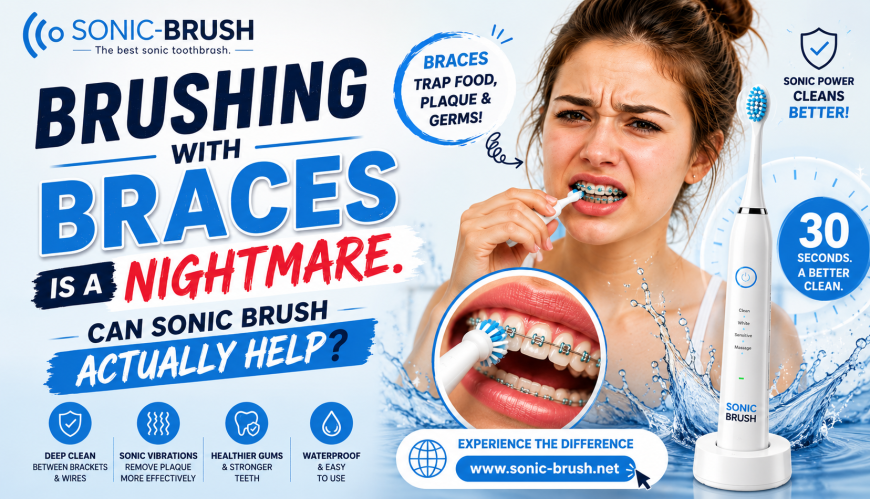
If you've ever worn braces, you know the exact moment. You brushed, you rinsed, you thought you were done, and then you smiled in the mirror, and there was a bit of lunch parked next to a bracket. Braces do that. They take something you used to knock out without thinking and turn it into a job. Metal squares, a wire running across all of it, and these little pockets everywhere that grab food and refuse to let go. And honestly, the harder it is, the easier it gets to just scrub the front and walk away.
That's the trap, though. Braces are the one stretch of your life where a lazy brush actually comes back to bite you. Plaque parks itself around the edges of the brackets and under the wire, and if it sits there, it turns into the puffy gums and chalky white squares every orthodontist keeps warning about. Some of those marks don't leave, either. They're still there when the braces come off. So people obsess over cleaning around braces for good reason, and that's usually where automatic brushes come into the chat.
Sonic Brush is a U-shaped automatic toothbrush, and instead of you snaking one brush head around all that hardware, it hits every surface at the same time. Which is the whole question here, really. Does that help around braces, or is it a fancier way of cleaning the same spots you were already getting?
Why Is Brushing With Braces So Hard?
People with braces aren't slacking. The hardware just gets in the way at every turn.
-
Every bracket has edges, and food tucks in around all of them. A normal brush stroke pretty much slides over the top and misses it.
-
The wire sits right where you're trying to clean. It runs along the gumline and blocks the brush from the exact strip that matters most.
-
Back teeth were already a pain. Now stick some metal on them and good luck.
-
And it's just discouraging. When your mouth never feels properly clean no matter what, you start brushing less, not more.
Here's the sneaky part: none of it announces itself. You don't notice a thing for months. Then the braces come off, and there are the white marks, and by then it's too late to go back and fix it.
Where the Trouble Actually Hides
A funny thing about braces is that the mess isn't really on the open face of the tooth, where you can see it. It's hiding in the spots you can't.
|
Trouble Spot |
Why It Traps Plaque |
|---|---|
|
Around each bracket |
Raised edges catch food a flat stroke misses |
|
Between wire and gum |
The wire blocks the brush from the gumline |
|
Back molars |
Awkward to reach, now with hardware in the way |
|
Between teeth |
Wires make normal flossing slow and fiddly |
Once you know where it's actually piling up, a quick pass across the front teeth stops feeling like enough. And no, brushing like you're sanding a table doesn't fix it either.
How Does an Automatic Design Change the Coverage?
A U-shaped brush just works in a different way. The mouthpiece goes around the whole arch and buzzes against the teeth all at once, so reaching everything doesn't come down to how well you can steer a brush head past bracket after bracket. Sonic Brush is built on that, making the all-at-once contact the point instead of something you have to nail with perfect aim. With braces, the hard part is honestly just getting to everything past the metal, so that kind of consistency is where it earns its spot. It's not a magic wand. It just takes some of the aiming and grind out of a job that usually leads to plain frustration.
Does This Replace Your Orthodontist's Advice?
No, and I'd hate for anyone to read it that way. Braces ask for more than any one toothbrush can give you, powered or not. The brackets and wire trap stuff in places that really need their own tools, an interdental brush or a floss threader, and your orthodontist might have their own rules for your particular setup. A good automatic brush can make the everyday cleaning easier and steadier, which does help you between visits. It doesn't get you out of the extra tools, though, or the professional cleanings, and it definitely doesn't overrule your orthodontist. It's one piece of the routine. That's it.
What Can You Do Starting Tonight?
-
Swish some water around first. It knocks loose the obvious chunks sitting around the brackets before you even start.
-
Spend real time on the gumline, above and below the wire, because that's ground zero for the whole problem.
-
Grab an interdental brush or a floss threader for the gaps a normal brush has no hope of reaching.
-
After you brush, actually look. Lean into the mirror and check around each bracket instead of glancing at your front teeth and trusting it.
Pro Tip
Stash a little interdental brush in your bag or your desk drawer. So much of the worst braces gunk builds up after lunch when your sink is nowhere in sight, and a quick thirty seconds beats letting it cement itself on there till you get home.
Final Verdict
Brushing with braces is genuinely hard, and for a real reason. The metal blocks the very spots you most need to get to, and once it stops ever feeling finished, the effort quietly slips. That's how the puffy gums and chalky marks creep up on people who thought they were doing fine. Sonic Brush takes a different route at it, spreading contact over every surface at once so the daily cleaning depends less on you threading a brush around all that hardware. It won't do the whole job solo. Pair it with the interdental tools, and whatever your orthodontist told you, keep actually checking around those brackets, and the smile waiting for you when the braces finally come off is the one you'll be glad you bothered with.
FAQs
Q1: Why does brushing with braces feel like it never gets clean?
Because the brackets and wire make edges and blind spots your brush just glides over. It really isn't you being careless. The hardware fights you.
Q2: Can an automatic toothbrush help clean around braces?
It can make the surface cleaning steadier by reaching everything at once. Helpful, sure, but it won't cover for skipping the interdental tools around the brackets.
Q3: What are the white marks people get after braces come off?
Early decay spots, basically, from plaque that camped around the brackets. They're a big part of why cleaning well during treatment is such a big deal.
Q4: Do I still need to floss if I have braces and use a good brush?
Yep. A floss threader or interdental brush gets between teeth and under the wire in a way no regular brush can. Don't talk yourself out of it.
Q5: Is it okay to brush harder to get around the brackets?
Please don't. Scrubbing harder just beats up your gums without cleaning any better. Thoroughness even wins over pressure.
Q6: How often should I replace my brush or brush head with braces?
Every three months as a rule, but braces shred bristles quicker, so swap it sooner the second it looks frayed.
Q7: Should I follow my orthodontist's cleaning advice over a brush's instructions?
Yes. They know your exact setup. Any brush is a sidekick to their advice, not a stand-in for it.