Your Mind Is Tired — Not Lazy
Feeling unmotivated doesn’t always mean you’re lazy. Learn the signs of mental exhaustion, why it happens, and practical ways to recharge your mind and restore focus.
 mariomoore90
In a world that constantly praises productivity, it is easy to label yourself as lazy when your energy drops. You sit in front of your work, stare at the screen, and feel unable to focus. Tasks that once felt simple now seem overwhelming. Motivation disappears. The immediate conclusion? “I’m lazy.”
But what if that isn’t true?
What if your mind is not lazy — just tired?
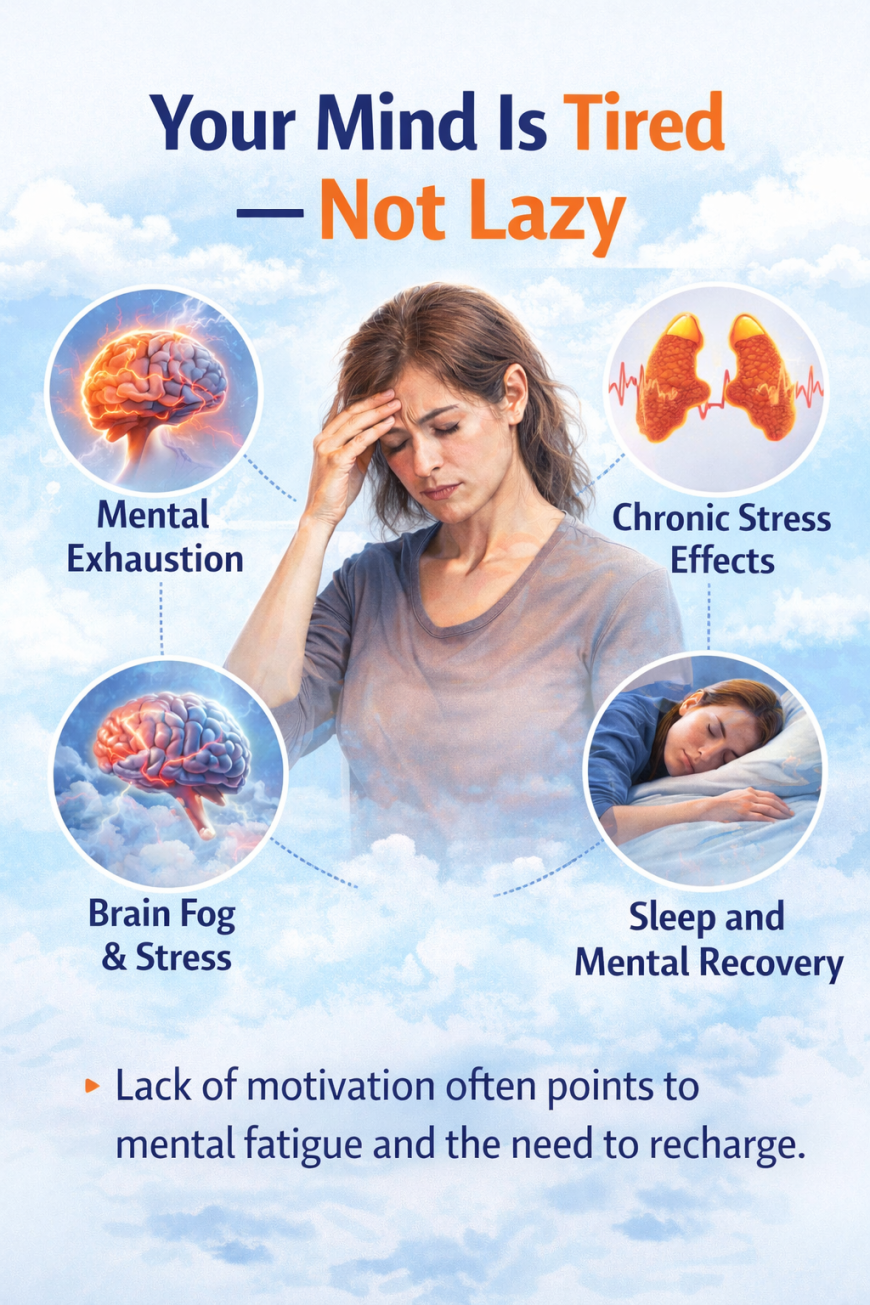
Mental fatigue is real. Unlike physical exhaustion, it is harder to measure and easier to judge. When your brain has been overstimulated for days, weeks, or even months, it begins to slow down. Concentration weakens. Creativity fades. Decision-making becomes stressful. This is not a character flaw. It is a biological signal.
The Difference Between Laziness and Mental Exhaustion
Laziness is a lack of willingness to act. Mental exhaustion is a lack of capacity to continue at the same pace. The difference matters.
When you are mentally tired, you often want to be productive. You feel guilty for not doing enough. You overthink unfinished tasks. You promise yourself you will “try harder tomorrow.” That guilt itself is proof that you care — and caring is not laziness.
Mental fatigue happens when the brain is overloaded. Constant notifications, multitasking, deadlines, emotional stress, poor sleep, and lack of downtime all drain cognitive resources. Your brain consumes a significant amount of energy daily. Without proper recovery, it cannot function at full strength.
Signs Your Mind Is Tired
Mental exhaustion does not always look dramatic. Sometimes it appears as:
-
Difficulty focusing on simple tasks
-
Forgetfulness or brain fog
-
Increased irritability
-
Lack of motivation
-
Feeling overwhelmed by small decisions
-
Procrastination despite urgency
-
Emotional numbness
These are not signs of weakness. They are signs that your nervous system needs rest.
Why Modern Life Makes It Worse
Today’s environment rarely allows the brain to switch off. Even during “rest,” you scroll through social media, check emails, or consume endless information. This keeps your brain stimulated instead of restored.
Sleep also plays a critical role. Poor sleep quality prevents the brain from clearing mental clutter and repairing neural pathways. Over time, sleep deprivation amplifies stress hormones, increasing mental strain.
Chronic stress further intensifies the issue. When cortisol levels remain elevated, your brain stays in a low-grade survival mode. Creativity and deep thinking decline because your system prioritizes immediate threats over long-term planning.
The Guilt Trap
One of the most damaging parts of mental fatigue is self-judgment. Calling yourself lazy adds emotional pressure to an already exhausted mind. This creates a cycle:
Mental fatigue → Reduced productivity → Self-criticism → Increased stress → Even more fatigue.
Breaking this cycle starts with changing your internal narrative. Instead of asking, “Why am I so lazy?” try asking, “What is draining my energy?”
How to Recharge Your Mind
Recovering from mental exhaustion does not require extreme changes. It requires intentional pauses.
1. Prioritize quality sleep.
Aim for consistent sleep timing and reduce screen exposure before bed.
2. Take true breaks.
Step away from screens. Go outside. Sit quietly. Let your brain rest without stimulation.
3. Reduce multitasking.
Focus on one task at a time. The brain performs better with clarity.
4. Move your body.
Light exercise increases blood flow to the brain and reduces stress hormones.
5. Set realistic expectations.
You are not a machine. Productivity naturally fluctuates.
Even small daily adjustments can significantly improve mental clarity over time.
Redefining Productivity
Rest is not the opposite of productivity — it supports it. High performance requires cycles of effort and recovery. Athletes understand this principle. The brain operates the same way.
When you constantly push without recovery, performance drops. When you allow structured rest, creativity and motivation return stronger.
A Final Reminder
If you feel stuck, unmotivated, or mentally slow, pause before labeling yourself. Ask whether you have truly rested. Ask whether you have been under silent stress. Ask whether your mind has been carrying more than it should.
Your mind is not lazy.
It may simply be asking for care, balance, and recovery.
Treat it with the same compassion you would offer someone else who is exhausted. When you do, you will often find that your drive was never gone — it was just waiting for the chance to recharge. Read More...