Why Grey Hair Feels Coarse and What You Can Do About It?
Understanding these changes is an important part of effective natural grey hair care. The good news is that coarse grey hair is usually manageable with the right routine, products, and expectations. From choosing a nourishing conditioner for natural grey hair to understanding how texture changes occur, a few simple adjustments can make a significant difference.
Grey hair often arrives with more than just a change in colour. Many people notice that their hair suddenly feels rougher, drier, frizzier, or harder to manage than it did before. If you've found yourself wondering why your once-smooth hair now feels wiry or coarse, you're not imagining it.
Understanding these changes is an important part of effective natural grey hair care. The good news is that coarse grey hair is usually manageable with the right routine, products, and expectations. From choosing a nourishing conditioner for natural grey hair to understanding how texture changes occur, a few simple adjustments can make a significant difference.
Why Does Grey Hair Feel More Coarse?
One of the biggest misconceptions about grey hair is that the colour change itself causes the rough texture. In reality, the process is more complex.
As hair follicles produce less melanin, they often undergo structural changes at the same time. These changes can affect the hair shaft, moisture levels, and overall texture.
Several factors contribute to coarser grey hair:
- Reduced natural oil production
- Changes in the hair follicle during ageing
- Increased dryness and moisture loss
- A rougher hair cuticle surface
- Greater susceptibility to environmental damage
Because grey hair tends to contain less moisture, it can feel stiffer and more resistant to styling. This is particularly noticeable around the temples, hairline, and crown, where many people first begin to see grey strands appear.
The Connection Between Grey Hair and Dryness
Dryness is often the real culprit behind coarse-feeling hair.
As we age, the scalp naturally produces less sebum, the oil that helps lubricate and protect hair strands. Without sufficient moisture, grey hair can become:
- Brittle
- Frizzy
- Dull-looking
- Difficult to detangle
- More prone to breakage
This is why hydration becomes one of the most important aspects of natural grey hair care. Rather than focusing solely on colour-related products, it's often more beneficial to prioritise moisture-rich hair care solutions.
Why Some Grey Hair Appears Wiry
Many people describe certain grey strands as feeling almost like wire. This happens because individual follicles can produce hair with a different diameter and texture than before.
In some cases, the hair shaft becomes thicker and more irregular. The cuticle layer may also become raised, creating a rougher surface that catches on neighbouring hairs.
Not every grey strand behaves the same way. Some remain soft, while others become noticeably coarser. Genetics, hair type, climate, and overall hair health all play a role.
Building a Better Natural Grey Hair Care Routine
When managing coarse grey hair, the goal isn't to fight the texture entirely. Instead, it's about improving softness, hydration, and manageability.
A few practical changes can help.
Choose a Gentle Cleanser
Harsh shampoos can strip away the limited natural oils that ageing hair still produces.
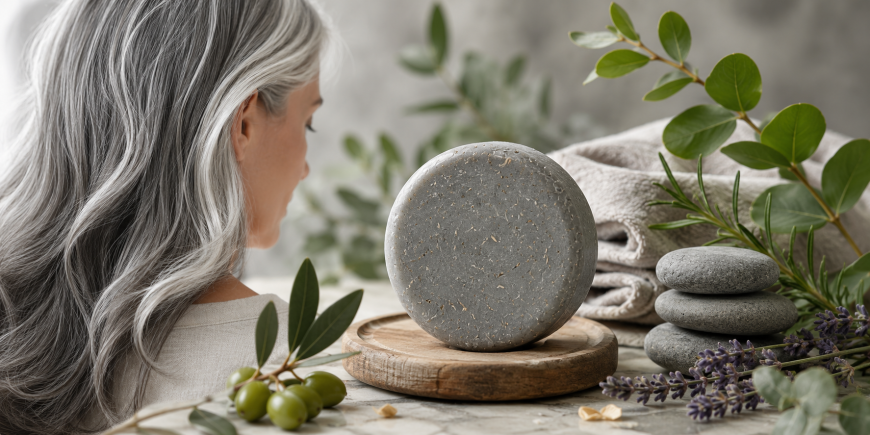
Many people transitioning to grey hair benefit from sulphate-free cleansers or a high-quality shampoo hair bar formulated with nourishing botanical ingredients. Unlike some traditional shampoos, well-crafted shampoo bars often focus on gentle cleansing while supporting moisture retention.
Ingredients such as coconut-derived cleansers, shea butter, cocoa butter, and plant oils can help maintain softness without leaving hair feeling heavy.
Prioritise Conditioning
Conditioning becomes increasingly important as hair ages.
Using a quality conditioner for natural grey hair helps replenish moisture, smooth the hair cuticle, and reduce frizz. The right conditioner can also improve shine, making silver and grey tones appear brighter and healthier.
When searching for the best conditioner for natural grey hair, look for products containing:
- Shea butter
- Argan oil
- Jojoba oil
- Aloe vera
- Coconut oil
- Hydrolysed proteins
- Botanical extracts
These ingredients help support hydration while improving softness and manageability.
What Makes the Best Conditioners for Grey Hair?
Not all conditioners are equally effective for ageing hair.
The best conditioners for grey hair focus on restoring moisture without creating excessive buildup. Since grey hair can be both dry and delicate, lightweight nourishment is often more effective than heavy formulations.
A good conditioner should help:
- Reduce rough texture
- Improve shine
- Control frizz
- Increase softness
- Minimise breakage
- Support easier styling
Consistency matters more than occasional intensive treatments. Regular conditioning after every wash often delivers better long-term results than relying solely on masks or deep conditioners.
How to Choose The Best Shampoo For Grey Hair
Many people focus heavily on conditioners, but cleansing products matter just as much.
When considering How to Choose The Best Shampoo For Grey Hair, it's helpful to think beyond marketing claims and focus on your hair's actual needs.
Look for shampoos that:
- Cleanse gently without stripping moisture
- Contain nourishing plant-based ingredients
- Avoid harsh sulphates when possible
- Support scalp health
- Help maintain natural shine
If your grey hair feels particularly dry or coarse, a moisturising shampoo hair bar may be a useful alternative to conventional liquid shampoos. Many bars are formulated with concentrated conditioning ingredients that support healthier-looking hair while reducing unnecessary additives.
The best shampoo isn't necessarily the one marketed specifically for grey hair. It's the one that helps your hair stay balanced, hydrated, and manageable.
Small Habits That Can Make a Big Difference
Product choices matter, but daily habits also influence how grey hair feels.
Consider these practical adjustments:
- Avoid excessively hot water when washing.
- Limit heat styling where possible.
- Use a wide-tooth comb on damp hair.
- Protect hair from prolonged sun exposure.
- Sleep on a smooth pillowcase to reduce friction.
- Trim regularly to prevent split ends.
These simple changes can help reduce stress on ageing hair and support healthier texture over time.
Embracing the Natural Texture of Grey Hair
One of the most overlooked aspects of grey hair care is acceptance.
Grey hair may never feel exactly like it did in your twenties, and that's completely normal. Hair naturally evolves with age, and some texture changes are part of that process.
The goal of effective natural grey hair care isn't to eliminate every sign of ageing. It's to keep hair healthy, comfortable, manageable, and looking its best.
With the right routine, even coarse grey hair can become noticeably softer, shinier, and easier to style.
Conclusion
If your grey hair feels coarse, dry, or wiry, you're experiencing one of the most common texture changes associated with ageing hair. Reduced oil production, structural changes in the hair shaft, and moisture loss all contribute to the rougher feel many people notice.
Fortunately, a thoughtful natural grey hair care routine can make a significant difference. Choosing a nourishing conditioner for natural grey hair, selecting one of the best conditioners for grey hair, and learning How to Choose The Best Shampoo For Grey Hair are all important steps toward healthier, more manageable hair. Whether you prefer traditional products or a moisturising shampoo hair bar, focusing on hydration and gentle care will help your natural grey hair look and feel its best.
Frequently Asked Questions
1. Why does grey hair become coarse as we age?
Grey hair often becomes coarse because ageing affects both the hair follicle and the scalp's natural oil production. As less sebum is produced, hair loses moisture more easily, leading to a rougher texture, increased dryness, and greater susceptibility to frizz and breakage.
2. Can grey hair become soft again?
Yes. While grey hair may naturally have a different texture than pigmented hair, proper hydration can significantly improve softness. Using a nourishing conditioner for natural grey hair, avoiding harsh cleansers, and maintaining a moisture-focused routine can help grey hair feel smoother and more manageable.
3. What is the best conditioner for natural grey hair?
The best conditioner for natural grey hair is one that provides lasting hydration without weighing hair down. Look for ingredients such as shea butter, aloe vera, argan oil, jojoba oil, and coconut oil, which help restore moisture, reduce frizz, and improve shine.
4.Are shampoo bars good for grey hair?
A quality shampoo hair bar can be an excellent choice for grey hair, especially when formulated with gentle cleansers and nourishing botanical ingredients. Many shampoo bars help cleanse without stripping essential moisture, making them suitable for dry or coarse grey hair.
5.How often should I condition grey hair?
Most people with grey hair benefit from conditioning after every wash. Since grey hair tends to be drier than pigmented hair, regular conditioning helps maintain softness, improve manageability, and protect against environmental stressors.