Why Choose the Festo 196044 Roundline Cylinder?
 jackzkr317
Introduction
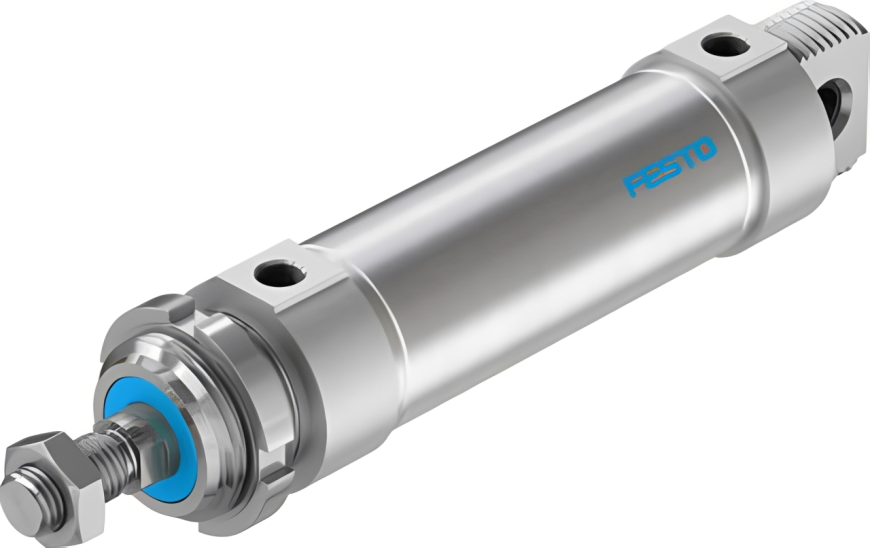
The Festo 196044 Roundline Cylinder is a double-acting pneumatic actuator designed for controlled linear movement in automated machinery. Identified as DSNU-50-100-PPV-A, it combines a 50 mm bore, 100 mm stroke, adjustable cushioning, and sensor-ready construction.
Its cylindrical body supports streamlined installation in assembly, packaging, handling, testing, and general machine-building systems. Reliable performance depends on correct pressure, airflow, mounting, alignment, cushioning, and load selection.
What Is the Festo 196044 Roundline Cylinder?
Festo part 196044 belongs to the DSNU round-cylinder family. It converts compressed-air energy into a straight pushing or pulling movement through a piston and piston rod.
The actuator operates from 1 to 10 bar, uses G1/4 pneumatic ports, and includes an M16 x 1.5 external piston-rod thread. Festo also specifies a magnetic piston for proximity sensing and an ambient range from -20°C to 80°C.
How Does Double-Acting Operation Work?
Compressed air enters one chamber and moves the piston forward. A directional valve then supplies the opposite chamber while exhausting the first, which pulls the rod back.
Because air powers both directions, the cylinder provides positive extension and retraction. This supports repeatable cycles where spring return or gravity would not provide enough control.
Suitable Pneumatic Solenoid Valves can automate directional switching when their function, flow, voltage, and port size match the circuit.
Why Are the 50 mm Bore and 100 mm Stroke Important?
The 50 mm bore determines the piston area and strongly influences available force. At 6 bar, Festo lists theoretical forces of approximately 1,178.1 N during advance and 989.6 N during retraction.
The 100 mm stroke defines the nominal travel for moving a gate, fixture, stop, clamp, or transfer mechanism. Unnecessary travel increases cycle time and air consumption.
How Does Adjustable Cushioning Improve Motion?
The PPV designation indicates adjustable pneumatic cushioning at both ends. As the piston approaches an end cap, trapped air slows the final movement and reduces impact.
Correct adjustment can lower noise, vibration, and stress. Technicians should set cushioning under real pressure, speed, and load because an unloaded test may not represent production behaviour.
Where Can the Festo 196044 Be Used?
The cylinder suits applications that need repeatable axial movement, including:
- Moving stops, gates, and diverters
- Positioning fixtures or inspection devices
- Pushing products between stations
- Operating packaging mechanisms
- Opening and closing machine elements
- Supporting assembly and test equipment
- Applying controlled clamping force
Where a task focuses mainly on holding workpieces, Pneumatic Clamping Cylinders may offer a specialised alternative designed around clamping duties.
When Is External Guidance Necessary?
A roundline cylinder is designed primarily to transmit force along the piston-rod axis. It should not guide a load that produces substantial side force, bending, or rotation.
For loads requiring integrated anti-rotation support, Pneumatic Guided Cylinders combine linear actuation with guide elements that resist lateral forces and moments.
External guidance can protect the rod, bearing, seals, and mounting points while improving movement accuracy.
How Should the Cylinder Be Mounted?
Install the actuator on a rigid structure and align the piston rod with the driven mechanism. Misalignment can create uneven seal wear, friction, leakage, and reduced service life.
Suitable Pneumatic Cylinder & Actuator Mounting Equipment can support fixed or pivoting installations through brackets, flanges, trunnions, rod ends, and related accessories.
The mounting arrangement must allow the load to move naturally without forcing the rod sideways.
How Does Position Sensing Support Automation?
The Festo 196044 is prepared for proximity sensing through its magnetic piston. A compatible sensor can confirm extended, retracted, or selected intermediate positions and send status information to a controller.
Pneumatic Cylinder & Actuator Switch & Sensor Mounting Equipment helps secure compatible sensing devices in the intended position.
Position feedback supports sequence control, fault detection, cycle counting, and coordination between pneumatic and electrical operations.
Why Do Pressure and Airflow Need Control?
The cylinder must receive enough pressure to overcome the load and sufficient airflow to achieve the required speed. Excessive pressure wastes energy, while low pressure can cause incomplete strokes.
Correctly selected Pneumatic Pressure Regulators help maintain an appropriate working pressure and must provide enough flow to avoid pressure drop during movement.
Tubing, fittings, valves, and exhaust paths should be sized as one system.
Can Manual Control Help During Commissioning?
Local manual operation can help technicians check movement, alignment, and cushioning before automatic production begins.
Suitable Pneumatic Manual Control Valves can provide controlled local actuation where the circuit and safety design permit it.
Manual testing must not bypass guards, interlocks, or stored-energy procedures. Operators should support gravity-loaded mechanisms before changing airflow.
What Specifications Should Buyers Confirm?
Before ordering, verify:
- Festo part number 196044
- Model DSNU-50-100-PPV-A
- 50 mm piston diameter
- 100 mm stroke length
- Double-acting operation
- Adjustable cushioning at both ends
- Operating pressure from 1 to 10 bar
- G1/4 pneumatic connections
- M16 x 1.5 piston-rod thread
- Proximity-sensor compatibility
- Required mounting accessories
- Load, speed, and environmental conditions
The complete technical data should guide replacement because similar cylinders may differ in stroke, cushioning, seals, or mounting compatibility.
How Should the Cylinder Be Maintained?
Inspect the piston rod, seals, fittings, sensors, tubing, and mounting hardware regularly. Look for scratches, contamination, leakage, looseness, irregular speed, and harsh end impact.
Before maintenance, isolate the air supply, release stored pressure, support suspended loads, and use compatible replacement parts.
Why Select the Festo 196044 Roundline Cylinder?
The Festo 196044 Roundline Cylinder combines a 50 mm bore, 100 mm stroke, double-acting motion, adjustable cushioning, and sensor capability in a streamlined DSNU design.
When correctly sized and installed, it can deliver smooth, repeatable linear movement. Matching pressure, flow, guidance, mounting, and cushioning to the application helps improve reliability, energy efficiency, and long-term machine performance.