What is the Best Employee Time Management Software for Remote Teams
Discover the best employee time management software for remote teams. Learn key features, benefits, implementation tips, and how to choose the right solution for productivity, project tracking, and workforce management.
 worksbuddy
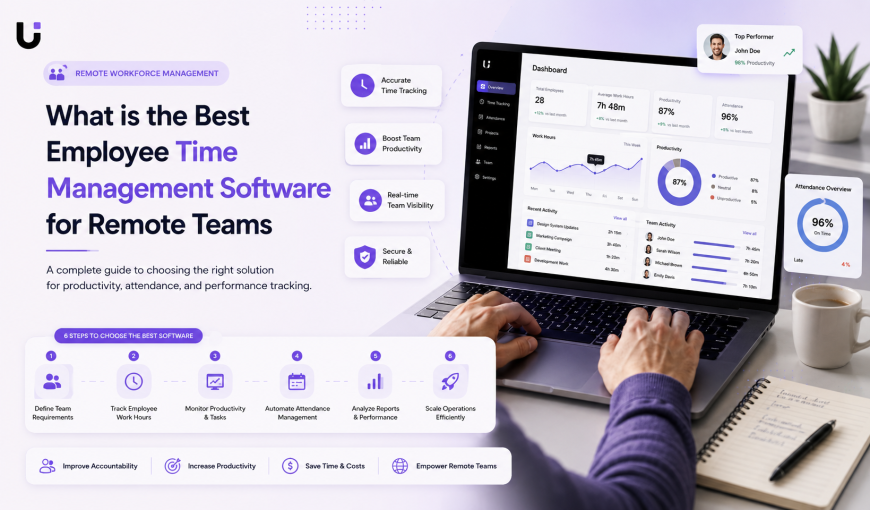
Best Employee Time Management Software for Remote Teams
Remote work has transformed how businesses operate, but managing productivity across distributed teams remains a challenge. Without proper visibility into how time is spent, organizations can struggle with missed deadlines, resource allocation issues, and inaccurate project forecasting. This is where employee time management software becomes essential.
Unlike traditional timesheets, modern time management tools do more than track hours. They connect employee time to projects, tasks, clients, and business objectives. This allows managers to understand not only how much time employees work but also where that time is being invested.
For remote teams, project-based time tracking is especially important. Team members often work across different time zones and schedules, making it difficult to monitor workloads through traditional methods. Effective software provides a centralized view of work activity, helping managers identify bottlenecks, prevent burnout, and improve productivity.
When evaluating employee time management software, several features stand out. Flexible time entry options are critical, as some employees prefer manual logging while others work better with running timers. Project and task tracking ensure that every hour is tied to meaningful work rather than being recorded as generic time. Real-time reporting gives managers immediate insights into project progress, team utilization, and budget performance.
Another key feature is integration with project management systems. When time tracking connects directly to tasks and projects, teams spend less time updating multiple tools and more time focusing on productive work. Approval workflows also help maintain data accuracy by allowing managers to review and approve logged hours before payroll or invoicing.
Several solutions are available for remote teams. Platforms like WorksBuddy combine time tracking, project management, workflow automation, and productivity monitoring within a single workspace. Other popular options include Toggl Track for simple timer-based tracking, Harvest for time tracking and invoicing, Clockify for budget-conscious teams, and Hubstaff for workforce monitoring and analytics.
Successful implementation starts with defining clear goals. Businesses should determine whether their primary focus is productivity tracking, project management, client billing, or workforce planning. Next, organizations should establish project structures and train employees on proper logging practices. Starting with a small pilot team before a company-wide rollout can help identify process improvements early.
Many organizations fail because they track hours without connecting them to tasks or projects. Others enforce a single tracking method for all employees, which often reduces adoption. The most effective approach is flexible, role-based, and focused on generating actionable insights.
Ultimately, the best employee time management software helps remote teams improve visibility, accountability, and productivity. By linking time tracking with projects and workflows, businesses can make smarter decisions, optimize resources, and deliver better results in an increasingly remote work environment.
Read Full Article: https://worksbuddy.ai/blogs/what-is-the-best-employee-time-management-software-for-remote-teams