What Features Should the Best Pillow for a Snorer Have?
Choosing a pillow for snoring made simple. Learn key features for support, side sleeping, gentle elevation, and apnea warning signs.
 pyramidpillow
Snoring can be a small annoyance or a nightly problem that ruins sleep for everyone in the home. In the United States and Canada, it is very common for adults to snore at least sometimes, especially during allergy season or when winter air dries out the nose. If you are shopping for the best pillow for a snorer, it helps to know what a pillow can realistically do, and what features actually matter.
A good pillow does not “cure” snoring. What it can do is improve sleep posture so breathing is easier and quieter. That is a big deal when your snoring is mostly caused by how your head and neck are positioned at night.
Why snoring happens and why pillow design matters
Snoring happens when air cannot move smoothly through the airway. During sleep, throat muscles relax. If the airway narrows, soft tissue can vibrate as you breathe, and that vibration creates sound.
The airway can narrow for many reasons, including nasal congestion, sleeping flat on your back, drinking alcohol close to bedtime, or gaining weight around the neck. Your pillow affects two important things: the angle of your neck and the position of your jaw. If your chin is pushed down or your head twists, the airway can become tighter.
What an anti snoring pillow is trying to change
An anti snoring pillow is designed to support your head and neck in a more neutral position. Some shapes also make side sleeping easier to hold through the night, because many people snore less on their side than on their back.
The goal is simple: reduce the posture problems that make breathing noisy. The best designs feel supportive, not forced. If a pillow makes you feel “stuck,” you are less likely to sleep well, and poor sleep can make snoring worse.
Feature one: Correct height for your sleep position
For the best pillow for a snorer, height is the make or break feature. Too high and your chin may tilt toward your chest. Too low and your head may tip back or fall to the side.
Think about your main sleep position.
Side Sleepers
Usually need enough height to fill the space between the shoulder and neck.
Back Sleepers
Usually need medium height with steady neck support.
Combination Sleepers
Need a pillow that stays consistent when they roll over.
A Quick At Home Check
When you lie on your side, your nose should point straight forward, not toward the ceiling and not toward the mattress.
Feature two: Neck support that lasts all night
Many people buy a pillow that feels good for the first 10 minutes, then it flattens. When support collapses, your head shifts, your jaw may drop, and snoring can get louder.
A well built anti snoring pillow stays supportive for hours. This is one reason shaped foam and structured designs are popular. The key is steady support, not extreme firmness. You should feel your neck supported, while your head still feels comfortable.
Feature three: A shape that supports side sleeping without pressure
Side sleeping can be a great position for quieter breathing, but it can also cause ear pressure or shoulder discomfort if the pillow is wrong. If your shoulder is compressed and your neck is bent, you may keep adjusting your posture all night.
The best pillow for a snorer supports the neck curve and keeps the head level. It also spreads pressure so you are not waking up with a sore ear or a tight jaw. If you often wake with jaw tension, your pillow may be pushing your head into a position that encourages mouth breathing.
Feature four: Gentle elevation for people who feel worse when lying flat
Some snorers notice that lying completely flat makes breathing feel harder, especially with congestion or reflux symptoms. In those cases, gentle elevation can help keep airflow steadier.
One option is a wedge style pillow that lifts the head and shoulders together. A structured wedge can be more stable than stacking two pillows, which often slide and bend the neck.
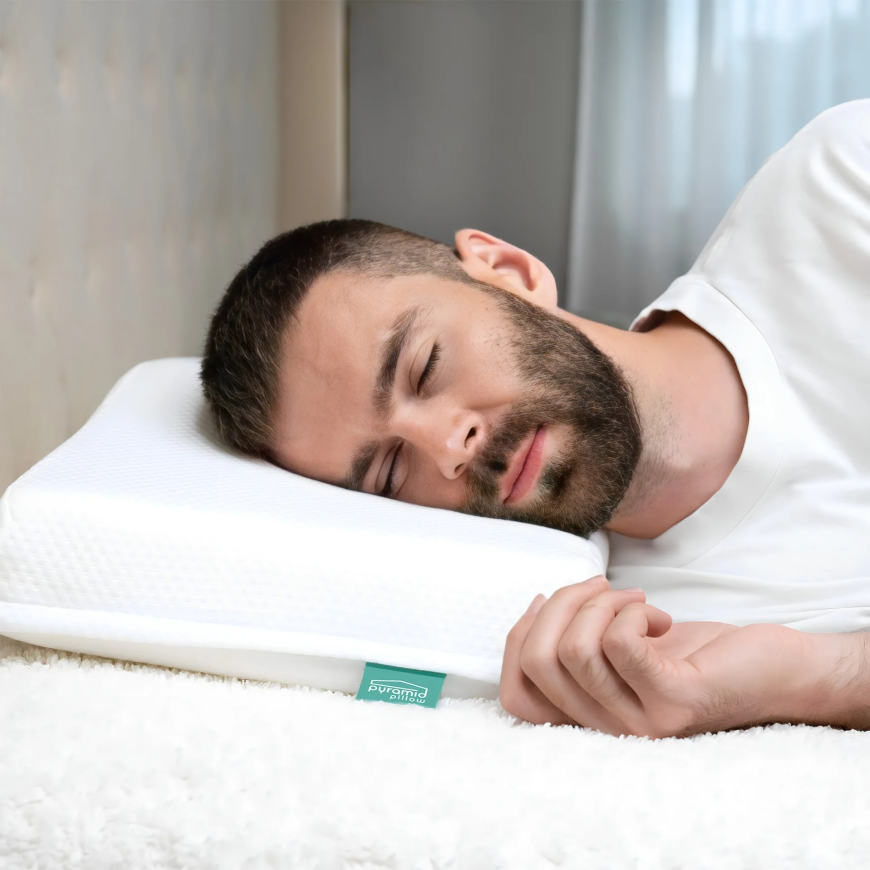
The Pyramid Pillow is one example of a structured wedge design. Its listed benefits include gradual upper body elevation, supportive foam structure, and a removable cover that can be cleaned. For some people, this kind of setup feels helpful during seasonal congestion because it supports a consistent sleeping angle without needing extra pillows.
Elevation should never cause neck strain. If you wake up sore, lower the angle or switch styles.
Feature five: Materials that match your comfort and temperature needs
Material matters because it affects both support and sleep quality. Restless sleep often leads to more snoring simply because your head position keeps changing.
Many people compare memory foam to fiber fill because foam tends to hold its shape longer. Others prefer latex or hybrid fills for a slightly bouncier feel. There is no single best material for everyone. What matters is that the pillow stays supportive and comfortable for your body.
If you sleep hot, look for breathable covers and keep your bedroom cool. Overheating leads to more wake ups, and more wake ups usually means more shifting into snoring positions.
Feature six: Cleanability and allergy friendly details
Congestion and snoring often show up together, especially in spring and fall allergy seasons. A pillow with a removable washable cover makes routine cleaning easier, which can help reduce dust and irritants in your sleep space.
Also consider how the pillow holds up to regular use. A pillow that quickly clumps or goes flat forces you to replace it sooner, and it makes consistent results harder to achieve.
How to test whether a pillow is actually helping
Give your body time to adjust. Most people need about 7 to 14 nights to know if a change is working.
Try to keep your sleep routine steady for that test period. If you share a bed, ask for feedback based on the whole week, not just one night. If you sleep alone, a simple sound recording can help you notice whether snoring is shorter or less intense.
A comfortable anti snoring pillow should also reduce morning signs like dry mouth or a scratchy throat, since these can be linked to mouth breathing.
When snoring needs medical attention
Even the best pillow for a snorer cannot treat obstructive sleep apnea. If snoring comes with choking, gasping, pauses in breathing, or strong daytime sleepiness, talk with a healthcare professional. Home sleep tests are widely used across the US and Canada and can be an easy first step.
FAQs
1) How do I know if an anti snoring pillow is the right height?
Your neck should feel neutral, not bent. On your side, your head should not tilt up or down. If you wake with neck pain, the height is likely wrong.
2) Can the best pillow for a snorer stop snoring completely?
Sometimes it can reduce snoring a lot when the problem is mainly posture. But snoring from heavy congestion or sleep apnea usually needs more than a pillow.
3) Is a wedge pillow better than a standard pillow for snoring?
For some people, gentle elevation helps, especially during colds or reflux flare ups. The best choice is the one that improves breathing without causing neck or back discomfort.