The Complete Guide to Choosing a Double Buggy in the UK (2026)
 Out N About
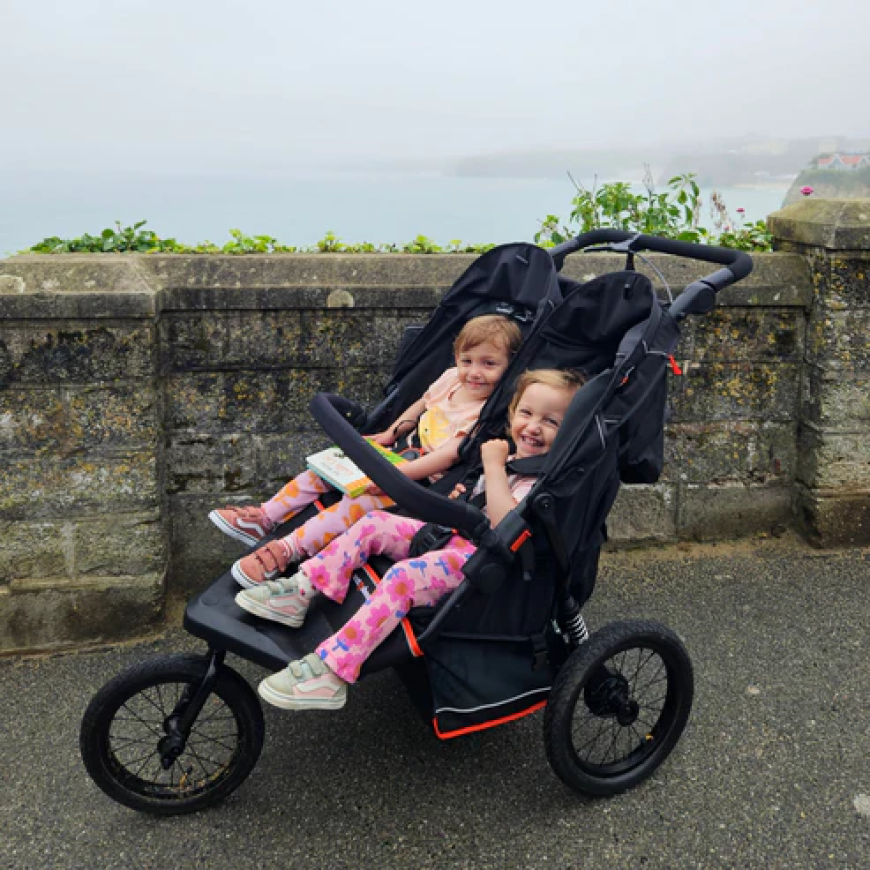
Welcoming two children into your daily routine, whether twins or siblings close in age is one of the most rewarding and logistically demanding experiences a parent can face. One decision that shapes nearly every outing is choosing the right double buggy. Get it right and you have a reliable companion for school runs, country walks, supermarket trips, and spontaneous adventures. Get it wrong, and you'll find yourself wrestling with a wide, unwieldy frame that refuses to fit through a standard doorway.
This guide walks you through everything you need to know before investing in a double pushchair, from key features to terrain capability with a focus on what genuinely matters for real family life in the UK.
Why a Double Buggy is a Game-Changer
Many parents underestimate just how much a well-designed double pushchair transforms daily life. Rather than juggling a pram alongside a walking toddler who tires quickly, a double buggy keeps both children secure, comfortable, and contained, giving parents both hands free and a far smoother journey from A to B.
A quality double buggy is also a long-term investment. Models designed to last from newborn through to four years old offer exceptional value, especially when they can be passed on or resold once the children have outgrown them.
Side-by-Side vs. Tandem: Which Layout Works Best?
This is often the first question parents ask. Tandem pushchairs seat one child in front of the other, making them narrower but longer. Side-by-side designs seat children next to each other, which tends to feel more equal for siblings and allows both children equal access to fresh air, views, and parental interaction.
For twins especially, a side-by-side arrangement is widely preferred; both children experience the journey equally, and it is easier to attend to both at the same time. The main concern with side-by-side double buggies has historically been width, but modern engineering has largely resolved this. Several leading UK models now fit within the 72–75cm range, which allows passage through standard doorways with ease.
Key Features to Look for in a Double Buggy
1. Frame Width As mentioned, aim for a frame under 75 cm if you plan to use the buggy indoors, in shops, or through standard door frames. A slim 72 cm frame is the sweet spot, wide enough for two comfortable seats and narrow enough for everyday environments.
2. Tyre Type and Suspension: UK terrain varies enormously. Air-filled (pneumatic) tyres absorb shocks far better than foam-filled alternatives, making them the preferred choice for parents who venture beyond paved surfaces. Rear suspension adds another layer of comfort, smoothing out kerbs, gravel paths, and uneven ground. If you are an active parent who enjoys running or jogging, look for models with larger wheels 14 inches or above which provide greater stability and momentum at pace.
3. Seat Recline and Position Children sleep at different times, and a good double buggy accommodates this with independently adjustable seat reclines. The ability to shift from a fully flat sleeping position to an upright seated position and ideally a bucket-style position for older toddlers keeps both children comfortable across different stages of a journey.
4. Fold Mechanism When you have two children in tow, simplicity matters enormously. A one-hand fold is not a luxury, it is a near-necessity. Look for a fold that can be completed quickly, ideally without requiring you to remove children, bags, or accessories first.
5. Storage Under-seat baskets on double buggies are frequently too small for practical use. Prioritise models with a genuinely spacious basket capable of holding a changing bag, shopping, or packed lunch without difficulty. Some parents find that a larger basket eliminates the need for an additional pram organiser or bag hooks entirely.
6. Safety Harness A five-point harness system with straps at both shoulders, both hips, and between the legs provides the highest level of child security. This is standard on quality double pushchairs, but worth verifying before purchase.
7. Brake System A foot-operated brake is standard, but the design matters more than people realise. Look for a brake that works regardless of footwear; a so-called flip-flop-friendly design ensures the brake engages and releases cleanly even in sandals or soft shoes.
All-Terrain Capability: What Does It Really Mean?
"All-terrain" is a phrase used liberally in pushchair marketing, but genuine off-road performance requires a specific combination of features. You need air-filled tyres of a meaningful size, adequate suspension, a stable three-wheel design with a swivel-lock front wheel, and a frame robust enough to handle the additional stresses of uneven ground.
For the majority of UK parents, the relevant terrain includes gravel paths, muddy parks, cobbled streets, and grass fields rather than mountain trails. A well-built double buggy with 12-inch air tyres and rear suspension handles all of these comfortably. Parents who run regularly and wish to bring both children along should look for models with larger 14-inch tyres, an integrated handlebar brake for speed control on hills, and ideally a buggy certified to official running safety standards.
Out'n'About, a British brand established in 2001 and trusted by over 300,000 families, has built its reputation on exactly this kind of genuine all-terrain performance. Their Nipper Double V6 range, available at outnabout.com/collections/double-nippers, sits at the intersection of everyday practicality and rugged outdoor capability, offering parents a side-by-side double buggy that handles city streets as confidently as countryside paths.
Newborn Compatibility: Do You Need a Carrycot?
Most double pushchairs are rated from six months onwards in their standard seat configuration, as young babies require a flat lying position to support healthy spinal and respiratory development. If you have a newborn — or are expecting twins, you will need either a carrycot attachment or a seat that reclines fully flat.
A carrycot compatible with your chosen pushchair provides a safe, enclosed sleeping environment suited to the earliest weeks and months. Some double buggy models offer dual carrycot compatibility, meaning both seats can be replaced with carrycots simultaneously, an important consideration for parents of newborn twins.
The Nipper Wagon: A Flexible Alternative
For families whose children are slightly older or who want a more sociable seating arrangement, a wagon-style pushchair offers an alternative worth considering. Rather than side-by-side seating facing forward, a wagon positions children facing each other, which encourages interaction and is particularly well-suited to slightly longer journeys, festivals, or days out where entertainment matters as much as transport.
Out'n'About's Nipper Wagon, part of the same double collection, is designed with exactly this use case in mind offering a multi-purpose solution for families juggling shopping trips, park visits, and social outings simultaneously.
Longevity and Value: Built to Last
One of the most overlooked factors in a double pushchair purchase is repairability. A buggy that cannot be repaired when a tyre punctures or a wheel bearing wears is, in effect, disposable. Brands that offer spare parts, rebuild services, and pre-loved resale programmes provide genuinely better long-term value — and a smaller environmental footprint.
When evaluating a double buggy, ask whether spare parts are readily available, whether the brand offers repair or refurbishment services, and whether there is an active secondhand market for the model. These factors often reflect the quality of the original engineering as much as any headline specification.
Summary: What to Prioritise
Choosing a double buggy comes down to understanding your own daily life. Consider the surfaces you walk most frequently, whether you exercise with your children, how often you navigate shops or public transport, and how long you expect to use the buggy. A side-by-side design with a slim frame, air-filled tyres, a one-hand fold, and genuinely reclining seats will serve the vast majority of UK families well across several years of daily use.