How to Translate Annual Reports Without Distorting Financial Data
Annual reports combine financial tables, footnotes, charts, accounting terms, and detailed disclosures. Learn how to translate them while preserving the numbers, structure, and meaning.
 ethan
ethan
Annual reports are among the most information-dense documents a business can publish.
They may include a letter from management, financial statements, auditor notes, risk disclosures, market analysis, charts, accounting policies, shareholder information, and descriptions of future strategy.
When an annual report needs to be translated, language is only one part of the challenge.
The translated document must preserve the relationship between financial figures and their labels. It must keep footnotes connected to the correct statements, maintain consistent accounting terminology, and distinguish between historical results, forecasts, estimates, and management opinions.
A translation that sounds fluent but places a number under the wrong heading can be more damaging than an awkward sentence.
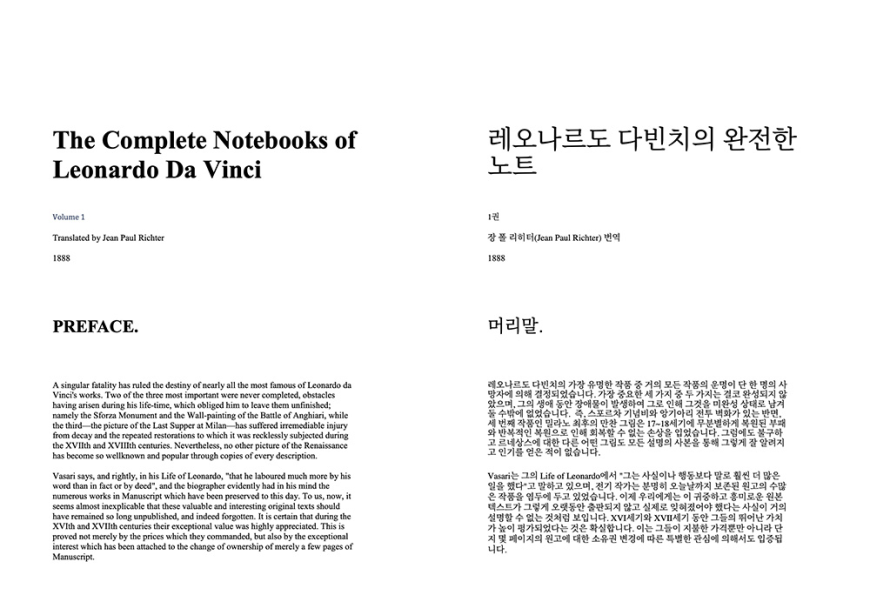
This guide explains how businesses, analysts, researchers, and international teams can translate annual reports and other financial PDFs without losing the structure that gives the data its meaning.
Why Annual Reports Are Difficult to Translate
An annual report is not a continuous article that can be copied into a general translation tool from beginning to end.
It often contains several document types inside one file:
-
Management commentary
-
Income statements
-
Balance sheets
-
Cash flow statements
-
Statements of changes in equity
-
Auditor reports
-
Notes to the financial statements
-
Risk-factor disclosures
-
Charts and performance graphs
-
Sustainability information
-
Shareholder data
-
Legal and regulatory statements
Each part requires a different approach.
Narrative sections should read naturally in the target language. Financial tables require structural precision. Auditor language may follow formal conventions. Notes and definitions must remain consistent across many pages.
Using a layout-aware PDF translator can reduce the manual work required to reconstruct the report, but the source file and translated output still need careful preparation and review.
Identify the Reporting Framework and Audience
Before translating the document, determine why the translated version is needed.
Possible audiences include:
-
International investors
-
Overseas employees
-
Business partners
-
Financial analysts
-
Regulators
-
Customers
-
Researchers
-
Potential acquisition targets
-
Parent or subsidiary companies
A translation prepared for general understanding may not require the same level of terminology review as a version intended for investors or regulatory submission.
The reporting framework also matters.
An annual report may use terminology associated with:
-
International Financial Reporting Standards
-
National accounting standards
-
Industry-specific reporting rules
-
Securities-exchange requirements
-
Internal management accounting
Terms that appear similar in ordinary language may have precise meanings in a financial context.
Before starting, identify the intended audience, the reporting standard, the source language, and the target market.
Establish One Authoritative Source File
Businesses frequently store several versions of the same annual report.
A shared folder may include files named:
Annual-Report-Draft.pdf
Annual-Report-Final.pdf
Annual-Report-Final-2.pdf
Annual-Report-Approved.pdf
Annual-Report-Approved-Revised.pdf
Translating the wrong version creates unnecessary work and can produce inconsistencies between language editions.
Before translation begins, confirm:
-
The official source filename
-
The publication date
-
The financial period covered
-
The version or revision number
-
The approving department
-
Whether the file includes the auditor’s final opinion
-
Whether any later corrections were issued
Give the translated file a clear filename that includes the language and version.
For example:
Annual-Report-2025-English-Final.pdf
Annual-Report-2025-Spanish-Final.pdf
Annual-Report-2025-Japanese-Final.pdf
This makes it easier to confirm that every translated edition comes from the same source.
Separate Narrative Content From Financial Data
The narrative sections of an annual report usually require context-aware translation.
Management may discuss:
-
Revenue growth
-
Market conditions
-
Operational challenges
-
Strategic priorities
-
Acquisitions
-
Product development
-
Sustainability goals
-
Future expectations
These passages should sound professional and natural, but the translator must preserve the difference between confirmed results and forward-looking statements.
Words such as “may,” “expects,” “intends,” “estimates,” “targets,” and “could” should not be strengthened into definite promises.
Financial data requires a different form of review.
Figures should normally remain unchanged unless the document specifically requires currency or unit conversion. Labels may be translated, but each number must remain connected to the correct:
-
Account
-
Period
-
Currency
-
Business segment
-
Geographic region
-
Unit
-
Footnote
-
Percentage
-
Comparison year
The translated words and the unchanged numbers must be reviewed together.
Protect Numbers From Unnecessary Changes
Financial documents contain many number formats.
Examples include:
-
1,250.50
-
1.250,50
-
$3.4 million
-
€2.8 billion
-
4.7%
-
(125)
-
-125
-
FY2025
-
Q4 2025
Decimal and thousands separators vary by language and region.
The value “1,250” may be understood differently depending on the formatting convention. Parentheses may indicate a negative figure or a deduction. A dash may mean zero, not applicable, or unavailable.
Before translation, decide whether the document will:
-
Preserve the original numerical format
-
Adapt separators to the target market
-
Retain the original currency
-
Display translated units
-
Include both original and converted values
Do not automatically convert currencies or measurements unless that task is specifically required and independently verified.
The safest default for many translated reports is to preserve the original figures and units while translating the labels and explanations around them.
Review Every Financial Table Structurally
A table can contain completely accurate figures and still communicate incorrect information if its structure changes.
Reviewers should compare important tables row by row and column by column.
Check that:
-
Column headings remain above the correct periods
-
Row labels remain beside the correct figures
-
Current-year and prior-year figures have not switched places
-
Consolidated and segment results remain separate
-
Currency labels remain visible
-
Percentage signs are preserved
-
Negative values remain negative
-
Parentheses are not removed
-
Totals remain aligned with the correct categories
-
Footnote markers remain beside the correct entries
Longer translated labels may wrap onto additional lines. This can move numbers downward or increase the height of table rows.
The layout may need to expand, but the relationship between each label and value must remain clear.
Do Not Ignore the Notes to the Financial Statements
The notes are often more important than the headline figures.
They may explain:
-
Accounting policies
-
Revenue-recognition methods
-
Debt terms
-
Tax positions
-
Legal disputes
-
Related-party transactions
-
Asset valuations
-
Impairment calculations
-
Pension obligations
-
Acquisition details
-
Contingent liabilities
-
Changes in estimates
A short note can significantly change how a figure should be interpreted.
Notes also contain many cross-references such as:
“See Note 7.”
“As described in Section 3.2.”
“Refer to the consolidated cash flow statement.”
After translation, verify that these references still point to the correct note, section, table, or page.
If page numbers change because translated text requires more space, references based on page location may need additional review.
Build a Financial Terminology Glossary
Consistent terminology is essential across a long report.
A term used in the balance sheet should not receive a different translation in the notes or management discussion.
The glossary may include:
-
Revenue
-
Net income
-
Operating profit
-
Gross margin
-
Current assets
-
Non-current liabilities
-
Shareholders’ equity
-
Cash equivalents
-
Accounts receivable
-
Accounts payable
-
Depreciation
-
Amortization
-
Impairment
-
Provisions
-
Deferred tax
-
Earnings per share
-
Free cash flow
The correct translation may depend on the target market’s established accounting language.
The glossary should also include:
-
Company names
-
Subsidiary names
-
Business-segment names
-
Product divisions
-
Industry abbreviations
-
Defined terms
-
Words that must remain untranslated
Once a term is approved, use it consistently throughout the report.
Preserve Abbreviations and Defined Terms
Annual reports frequently introduce abbreviations and defined terms.
For example:
“ABC Holdings plc, referred to as the Company”
“Earnings before interest, taxes, depreciation and amortization, or EBITDA”
“Environmental, social and governance, or ESG”
The translated document should preserve the relationship between the full term and its abbreviation.
Do not translate a recognized abbreviation differently on every page.
A useful process is:
-
Identify the term when it first appears.
-
Confirm whether the target market has an established equivalent.
-
Preserve the original abbreviation when appropriate.
-
Use the same form throughout the report.
-
Record the decision in the terminology glossary.
Product codes, stock symbols, legal entity names, and exchange abbreviations should also be checked carefully.
Handle Charts and Graphs as Data
Charts can create translation problems because important text may be embedded inside an image.
A performance graph may include:
-
Chart title
-
Axis labels
-
Data labels
-
Legends
-
Period names
-
Currency or unit labels
-
Source notes
-
Explanatory callouts
Translating only the paragraph below the chart may not be enough.
Review whether the text inside each graph needs to be translated for the target audience to understand it.
Also verify that:
-
Legend labels remain connected to the correct series
-
Years appear in the correct order
-
Percentages match the displayed data
-
Colors and patterns still correspond to the right categories
-
Axis scales have not changed
-
Source notes remain visible
-
Chart titles describe the correct metric
A graph that looks attractive but contains switched labels can misrepresent business performance.
Check Scanned Pages and Signed Reports
Some annual reports contain scanned material, including:
-
Signed auditor statements
-
Certification pages
-
Historical documents
-
Stamped approvals
-
Handwritten signatures
-
Scanned appendices
These pages require optical character recognition if their text must be translated.
OCR can confuse characters such as:
-
O and 0
-
I and 1
-
S and 5
-
Commas and decimal points
-
Hyphens and minus signs
-
Similar company names
Signed names and handwritten marks should normally remain as images rather than being treated as text for translation.
Pay special attention to auditor names, report dates, registration numbers, legal entity names, and signed declarations.
Distinguish Historical Results From Forecasts
Annual reports often discuss both past performance and future expectations.
These statements should not be blended together.
Historical language may include:
-
Revenue increased
-
Costs declined
-
The company acquired
-
The board approved
-
The division generated
Forward-looking language may include:
-
The company expects
-
Management believes
-
The group intends
-
Results may improve
-
Demand could increase
-
The company targets
A translation that changes “may increase” into “will increase” alters the company’s level of certainty.
Review forecast-related wording separately, especially in:
-
Outlook sections
-
Strategy discussions
-
Market forecasts
-
Capital-investment plans
-
Growth targets
-
Risk disclosures
-
Forward-looking statement notices
The translated text should preserve uncertainty, conditions, and limitations found in the source.
Use a Bilingual PDF During Review
A translated-only report is usually easier for investors and general readers.
During quality control, however, a bilingual or dual-column version is more practical.
Reviewers can use it to compare:
-
Financial terminology
-
Table headings
-
Numbers and dates
-
Footnote language
-
Auditor wording
-
Risk statements
-
Segment names
-
Cross-references
-
Forecast language
The bilingual file does not need to be the final published version.
A practical workflow is:
-
Generate a bilingual PDF for review.
-
Compare high-risk tables and disclosures with the source.
-
Record terminology and formatting corrections.
-
Obtain financial and language approval.
-
Prepare a translated-only PDF for distribution.
A detailed PDF translation guide can help users understand OCR, layout detection, translation-engine selection, and available output formats.
Assign Review Responsibilities
Annual reports should not be reviewed only as language documents.
Different specialists should focus on different risks.
A language reviewer can check:
-
Grammar
-
Tone
-
Readability
-
Terminology consistency
-
Sentence meaning
A financial reviewer can check:
-
Accounting terminology
-
Numbers
-
Periods
-
Currency labels
-
Financial statement relationships
-
Notes and disclosures
A document reviewer can check:
-
Page order
-
Table alignment
-
Charts
-
Footnotes
-
Text overflow
-
Fonts and visual structure
A legal or compliance reviewer may need to check:
-
Auditor statements
-
Risk disclosures
-
Forward-looking statements
-
Regulatory language
-
Shareholder notices
The document owner should confirm that all corrections have been incorporated into the final version.
Prioritize High-Risk Sections
A long annual report may contain hundreds of pages. Not every paragraph needs the same level of review.
Prioritize sections where an error could significantly change interpretation.
High-risk content includes:
-
Financial statements
-
Auditor opinions
-
Debt information
-
Tax disclosures
-
Legal proceedings
-
Related-party transactions
-
Risk factors
-
Earnings-per-share calculations
-
Dividend information
-
Forecasts and targets
-
Major acquisition details
-
Going-concern statements
Review these sections directly against the source, even when the translation appears fluent.
Final Quality-Control Checklist
Before publishing or distributing the translated annual report, confirm that:
-
The correct source version was used.
-
Every page and appendix is included.
-
Financial periods remain in the correct columns.
-
Numbers, percentages, and currencies match the source.
-
Negative values and parentheses remain visible.
-
Accounting terminology is consistent.
-
Company and subsidiary names are unchanged.
-
Footnote references point to the correct notes.
-
Charts retain the correct titles and legends.
-
Auditor language has been reviewed.
-
Forecasts remain clearly distinguished from confirmed results.
-
Tables remain readable when printed or viewed on a smaller screen.
-
The bilingual review copy has been checked.
-
Financial, language, and document reviewers have approved the final file.
Conclusion
Translating an annual report requires more than producing professional-sounding paragraphs.
The translated version must preserve the relationships between financial figures, labels, notes, dates, currencies, charts, and disclosures.
AI-assisted PDF translation can reduce the time required to extract content and rebuild complex pages. However, financial data still requires structured review and clear responsibility.
The best translated annual report is not simply readable.
It allows an international reader to reach the same understanding of the company’s performance, risks, and financial position as a reader of the original document.