How to Remove a Stuck Screw
 Robert Micheal
A stuck screw can be frustrating, especially when it refuses to turn even with the correct screwdriver. Rust, corrosion, dirt, over-tightening, or damaged threads can all make a screw difficult to remove. The key is to avoid using excessive force at the start. With the right tools and a careful approach, you can often loosen a stuck screw without damaging the screw, tool, or surrounding material.
Why Do Screws Get Stuck?
Screws can become stuck for several reasons. Rust and corrosion can bond the screw to the material, while dirt or paint can block the threads. Over-tightening may also make a screw extremely difficult to turn. In some cases, the screw head becomes damaged, making it harder for the screwdriver to grip. Identifying the cause can help you choose the safest removal method.
How to Remove a Stripped Screw
If the screw is stuck and its head is also damaged, knowing How to Remove a Stripped Screw can help you choose the right technique. Start with gentle methods and increase the level of force only when necessary.
1. Use the Correct Screwdriver
Make sure you are using the correct screwdriver size and type. A properly fitting screwdriver gives you the best chance of turning the screw without damaging the head.
Push the screwdriver firmly into the screw and turn slowly counterclockwise. Keep the screwdriver straight and avoid sudden movements.
2. Apply Penetrating Lubricant
For rusty or corroded screws, a penetrating lubricant can help loosen the connection.
Apply a small amount around the screw and allow it to sit according to the product instructions. Then try turning the screw again with steady pressure.
3. Tap the Screwdriver
Light tapping can sometimes help break the bond between the screw and the surrounding material.
Place the screwdriver firmly into the screw head and gently tap the handle with a suitable tool. Then apply downward pressure and slowly turn the screwdriver.
Avoid heavy impacts, especially when working with fragile materials.
4. Use a Rubber Band for a Damaged Head
If the screw head is partially stripped, place a wide rubber band over it. Push the screwdriver firmly through the rubber and into the screw head.
The rubber can provide extra friction and help the screwdriver grip the remaining grooves.
5. Try Pliers
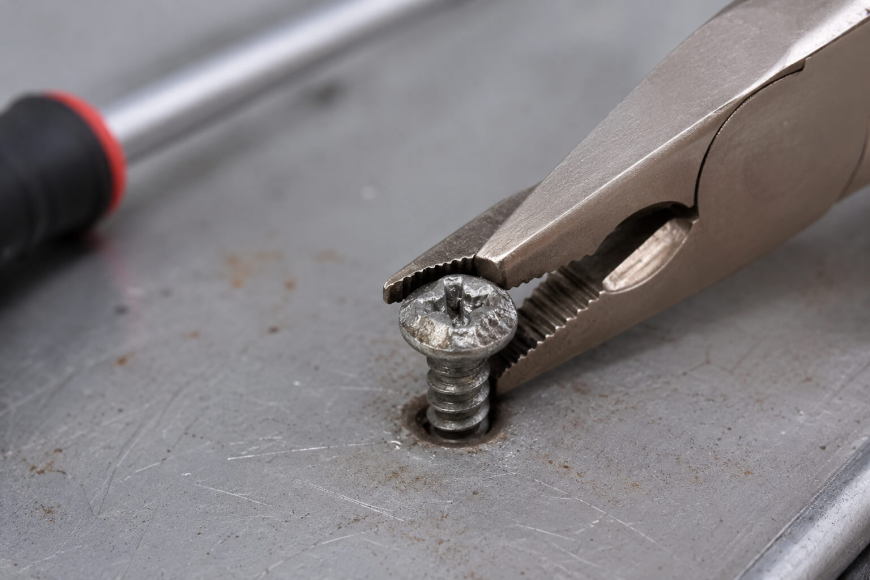
If the screw head extends above the surface, locking pliers may provide enough grip to remove it.
Clamp the pliers tightly around the outside of the screw head. Turn slowly counterclockwise while maintaining a firm grip. This method is particularly useful when the screwdriver can no longer grip the screw.
6. Use Heat Carefully
For certain metal fasteners, controlled heat can sometimes help loosen a stubborn connection by causing slight expansion and contraction.
Only use heat when it is safe for the surrounding material and there are no nearby flammable materials, wiring, plastics, or sensitive components. Allow the area to cool appropriately before handling it.
7. Use a Screw Extractor
If simpler methods fail, a screw extractor may be the best option. Extractors are designed to grip damaged screws and turn them out.
Follow the extractor manufacturer's instructions carefully. Many types require a pilot hole, so work slowly and keep the tool aligned with the screw.
What Should You Avoid?
Do not keep forcing a screwdriver when it repeatedly slips. This can completely damage the screw head and make extraction harder.
Avoid using excessive torque with small tools, as the tool or screw can break. If you are working on delicate equipment, stop before causing damage to the surrounding material.
How to Prevent Screws From Getting Stuck
Use the correct screwdriver or driver bit and avoid over-tightening screws. Keep tools aligned with the screw head and replace worn bits when necessary.
For outdoor or damp environments, choosing suitable corrosion-resistant fasteners can also reduce future problems. Keeping screws clean and dealing with rust early can make later removal easier.
Final Thoughts
Removing a stuck screw usually requires patience rather than excessive force. Start with the correct screwdriver, then try penetrating lubricant, gentle tapping, pliers, or another suitable method depending on the condition of the screw. If the head is badly damaged, a screw extractor can provide a more reliable solution. Work carefully, protect the surrounding material, and stop if the repair becomes unsafe.