How Rooftop HVAC Units Improve Climate Control in Commercial Buildings
Walk into a commercial building and you notice it right away. Either it feels comfortable… or something’s off. Too warm near the windows, freezing in the middle, stale air that just sits there. People don’t always complain out loud, but yeah, they feel it.
 crissmiel
Walk into a commercial building and you notice it right away. Either it feels comfortable… or something’s off. Too warm near the windows, freezing in the middle, stale air that just sits there. People don’t always complain out loud, but yeah, they feel it.
That’s where rooftop HVAC units quietly do their job. Or don’t, if they’re set up wrong.
In a place like Colorado Springs, where weather swings aren’t exactly gentle, commercial hvac colorado springs setups have to handle a lot more than just basic heating and cooling. We’re talking big spaces, uneven layouts, constant usage. Offices, warehouses, retail stores… all different, all tricky in their own way.
And rooftop units? They’re kind of the go-to for handling that chaos.
What Rooftop HVAC Units Actually Are (Simple Version)
No need to overcomplicate it.
A rooftop HVAC unit, often called an RTU, is a self-contained system installed on top of a building. Heating, cooling, ventilation — all packed into one unit. It pushes conditioned air through ducts into the building below.
That’s it.
The big advantage? It keeps all the heavy equipment out of your usable space. No bulky systems taking over storage rooms or mechanical closets. Everything’s up top, out of sight.
For commercial properties, that’s a big deal. Space equals money.
Why Commercial Buildings Lean Toward Rooftop Systems
It’s not just about saving space. There’s more going on here.
Rooftop units are easier to scale. You can install multiple units across a building instead of relying on one massive system. That means better control, less strain on a single unit, and honestly, fewer headaches when something breaks.
And yeah, things break. It happens.
Instead of the whole building losing climate control, one section might go down while the rest keeps running. That’s huge for businesses that can’t afford downtime.
Property managers love that kind of flexibility. Less panic, more control.
Better Climate Control (Not Just “Hot or Cold”)
Here’s where rooftop systems actually shine.
It’s not just about making air colder or warmer. It’s about managing airflow, humidity, and consistency across a space that’s probably not uniform to begin with.
Think about a retail store. Big open area, glass windows, constant door opening. That’s a nightmare for temperature control.
Rooftop units handle this by:
-
Distributing air more evenly
-
Allowing zoning across different areas
-
Adjusting output based on demand
It’s not perfect, nothing is, but it’s way more effective than trying to force a residential-style system into a commercial space.
Installation: Why It’s Not a DIY Conversation
Installing rooftop HVAC isn’t just “put it on the roof and connect it.”
There’s structural work. Electrical setup. Duct design. Load calculations. A lot of things that can go wrong if rushed.
This is where companies like HVAC Solutions step in. They handle the full process sales, installation, repair, and maintenance which matters more than people think. Because installing the unit is just the beginning. If it’s not sized right or positioned properly, you’re stuck with problems for years.
Builders and contractors usually get this. They know bad HVAC planning can ruin an otherwise solid project.
Energy Efficiency (And Why It Actually Matters Now)
Energy costs aren’t what they used to be. Everyone’s watching their bills now.
Rooftop units, especially newer models, are built to be more efficient. Better compressors, smarter controls, improved airflow systems. All that adds up.
But here’s the catch efficiency depends heavily on installation and maintenance.
A poorly maintained unit? It’ll eat energy like crazy.
Regular servicing, filter changes, system checks… yeah, it’s boring stuff. But it keeps the system running the way it should.
And when something starts to slip, like uneven heating or weak airflow, it often leads to calls for heating repair colorado springs services. Usually at the worst possible time. Middle of winter, tenants complaining, everyone stressed.
Preventive maintenance saves you from that mess. Most of the time, anyway.
Maintenance and Repairs: The Part People Ignore Until It’s Too Late
Let’s be honest. Nobody thinks about HVAC maintenance until something stops working.
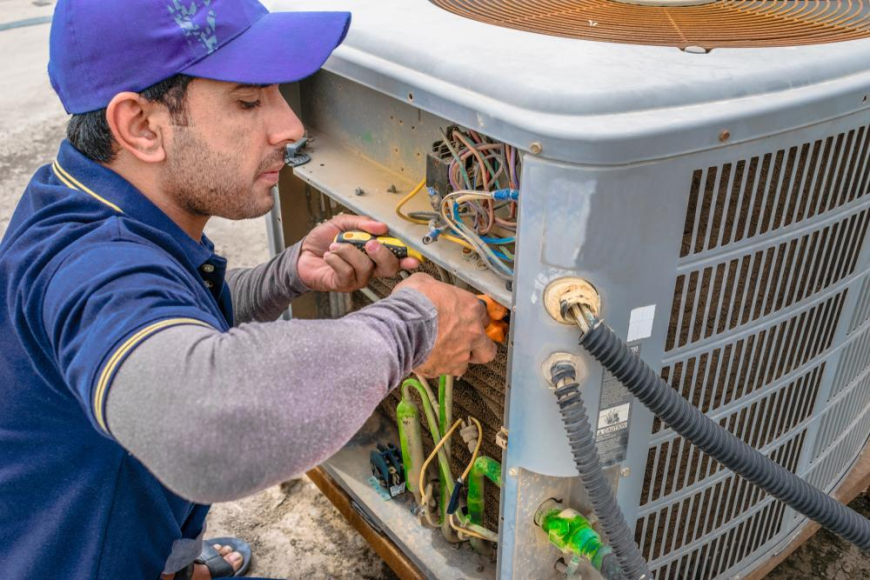
With rooftop units, maintenance is a bit easier in one way — technicians can access the system without disrupting the building interior. No need to shut down offices or move equipment around.
But it still needs to be done regularly.
Common issues?
-
Dirty filters
-
Worn-out components
-
Airflow restrictions
-
Thermostat inconsistencies
Ignore those long enough, and yeah… you’re calling for emergency repairs.
Companies like HVAC Solutions usually offer maintenance plans for this exact reason. It’s not just about fixing problems, it’s about avoiding them in the first place.
Why Rooftop Units Make Sense for Property Investors and Managers
If you’re managing multiple properties or investing in commercial spaces, rooftop HVAC systems offer something valuable — predictability.
You can standardize systems across buildings. Easier to maintain, easier to repair, easier to budget for.
And when tenants ask about climate control, you’ve got a system that can actually handle different needs without constant adjustments.
That matters more than people think.
Comfort affects productivity. It affects customer experience. It even affects how long tenants stay.
Not exactly a small thing.
When Rooftop HVAC Might Not Be the Best Fit
Alright, let’s not pretend it’s perfect.
Rooftop units aren’t ideal for every building. Smaller properties or certain layouts might not benefit as much. Structural limitations can also come into play — not every roof is built to handle the load.
And sometimes, other systems just make more sense depending on the design.
That’s why proper evaluation matters. Not guessing. Not copying what another building did.
Final Thoughts
Rooftop HVAC units aren’t flashy. Most people don’t even notice them.
But they play a big role in how a commercial space feels, day to day.
They help balance temperature, improve airflow, and keep things running without taking over valuable interior space. When installed and maintained properly, they’re reliable. Not perfect, but solid.
If you’re dealing with climate control issues, or planning a new commercial project in Colorado Springs, it’s worth looking into. HVAC Solutions is one of those companies that handles the full picture from system sales and installation to ongoing repair and maintenance which makes the whole process a lot smoother.
And when things do go wrong, and they will eventually, having access to dependable heating repair colorado springs services can save you from bigger problems down the line.
At the end of the day, it’s not just about the system sitting on the roof.
It’s about what’s happening inside the building.