How Accurate Are Online IQ Tests for Academic Success Predictions
Online IQ tests may provide a rough indication of performance on certain cognitive tasks, and cognitive ability can be associated with academic achievement. However, an online IQ score should not be considered a reliable standalone predictor of grades, examination results, or future educational success.
 marcoreid
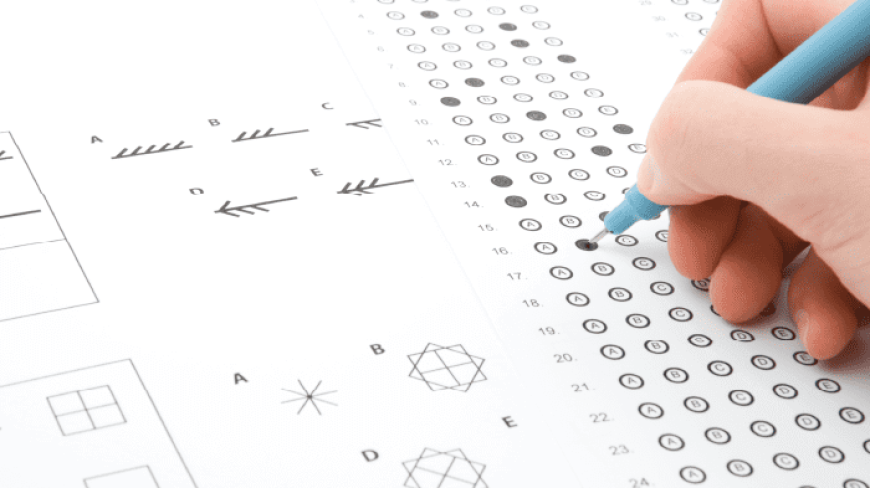
Online IQ tests are widely used by students, parents, educators, and curious individuals who want to learn more about cognitive ability. These tests often promise to estimate intelligence by measuring skills such as logical reasoning, pattern recognition, memory, numerical thinking, and problem solving. Because these abilities can play a role in learning, it is understandable that people may wonder whether an online IQ score can predict academic success.
This leads to an important question: how accurate are online IQ tests for academic success predictions?
The answer is that online IQ tests may provide some information about cognitive abilities associated with academic performance, but they should not be treated as reliable predictors of educational achievement on their own. Academic success is influenced by many factors beyond the abilities typically measured by an IQ test. Study habits, motivation, educational opportunities, emotional well-being, family support, teaching quality, attendance, persistence, and personal circumstances can all affect academic outcomes.
Understanding the relationship between IQ scores and academic achievement can help students and parents interpret online test results more realistically.
What Is an IQ Test?
An IQ test is designed to measure specific aspects of cognitive ability. Depending on the assessment, these may include verbal reasoning, working memory, processing speed, numerical reasoning, visual-spatial ability, and logical problem solving.
Traditional intelligence assessments use standardized procedures and established norms to interpret performance. Instead of simply calculating the percentage of questions answered correctly, standardized testing compares performance with an appropriate reference population.
Online IQ tests vary greatly in quality. Some use questions inspired by established cognitive testing methods, while others are designed primarily for entertainment.
This distinction matters when considering whether an online score can be used to make predictions about academic performance.
How Accurate Are Online IQ Tests?
When asking how accurate are online iq tests it is important to separate the accuracy of the individual test from the predictive value of an IQ score.
A well-designed online test may provide a reasonable estimate of performance on certain reasoning tasks. However, many online IQ tests do not provide enough evidence about their reliability, validity, scoring systems, or normative samples to justify treating their results as precise measurements of intelligence.
Even if an online IQ test accurately measures certain cognitive abilities, that does not mean it can accurately predict a student's grades, examination results, or future academic achievements.
Academic performance is a complex outcome.
A student with a high cognitive test score may perform poorly because of low motivation, inconsistent attendance, ineffective study habits, stress, or lack of interest in a subject. Meanwhile, a student with an average IQ score may achieve excellent grades through persistence, organization, strong study habits, and effective support.
Therefore, an online IQ score should be viewed as one possible indicator of cognitive performance rather than a complete prediction of academic success.
Is IQ Related to Academic Achievement?
There is a relationship between cognitive ability and academic performance. Students who perform well on certain measures of reasoning and cognitive ability may find some forms of academic learning easier.
For example, strong reasoning skills can help a student understand complex concepts, recognize relationships between ideas, solve unfamiliar problems, and learn new information.
However, a relationship between two factors does not mean that one factor determines the other.
Academic achievement involves much more than cognitive ability. Students need to understand course material, remember information, complete assignments, manage deadlines, prepare for examinations, communicate effectively, and remain motivated.
A student's environment also matters.
Access to good educational resources, experienced teachers, stable learning conditions, parental support, and opportunities for enrichment can influence academic outcomes.
This is why IQ should not be viewed as a student's academic destiny.
What Do Online IQ Tests Measure?
To understand their predictive limitations, it helps to examine what online IQ tests actually measure.
Logical Reasoning
Many online tests contain questions requiring users to identify patterns, relationships, or rules. These tasks can measure aspects of logical and abstract reasoning.
Such abilities may be useful in subjects that require structured problem solving, including mathematics and science.
Verbal Reasoning
Some tests measure vocabulary, analogies, reading-related reasoning, or relationships between words.
Verbal reasoning can be relevant to academic work because students often need to understand written instructions, interpret information, and communicate ideas.
However, performance can also be influenced by language background and educational experience.
Numerical Reasoning
Numerical sequences and mathematical reasoning problems may appear in online IQ tests. These tasks can provide information about certain forms of numerical problem solving.
They should not, however, be confused with academic mathematics achievement. School mathematics also depends on knowledge of formulas, concepts, procedures, and subject-specific skills.
Working Memory
Working memory involves temporarily holding and manipulating information. It can be useful when students follow multi-step instructions, solve problems, read complex material, or perform calculations.
However, an online test that contains only a few memory questions cannot provide a complete assessment of a student's learning capacity.
Why IQ Alone Cannot Predict Academic Success
Academic success is influenced by numerous variables.
Motivation
A highly capable student may not perform well academically if they have little motivation to complete assignments or prepare for examinations.
Motivation can determine how much effort a student puts into learning, particularly when the material is difficult or uninteresting.
Study Habits
Effective study strategies can have a significant impact on academic performance.
Students who organize their time, review material regularly, practice questions, ask for help, and prepare in advance may achieve strong results regardless of whether their IQ score is exceptionally high.
Persistence
Academic learning often involves failure and repetition. Students need to continue working when they encounter difficult concepts.
Persistence can help students overcome challenges that cannot be predicted by a single cognitive test.
Educational Environment
The quality of education can influence achievement significantly. Students with access to effective teaching, learning materials, technology, tutoring, and supportive environments may have advantages that an IQ test cannot capture.
Emotional and Social Factors
Stress, anxiety, confidence, family circumstances, peer relationships, and other personal factors can affect concentration and academic performance.
A student may have strong cognitive abilities but struggle academically during a period of significant stress.
Why Online IQ Tests May Be Especially Limited
Online testing introduces additional variables that can affect results.
Students may take an online IQ test while tired, distracted, or unfamiliar with the testing format. Some may use calculators, search engines, or assistance from other people. Others may repeatedly take similar tests and become familiar with common question types.
These factors can change scores.
Another concern is that many online tests do not explain how their scores were standardized. An online test might provide an IQ number that looks highly precise, but without appropriate norms and validation, the number may have limited meaning.
This makes it risky to use an online score to predict whether a student will succeed academically.
Can a High IQ Guarantee Academic Success?
No.
A high IQ score may indicate strong performance in certain areas of cognitive reasoning, but it cannot guarantee high grades.
Academic success requires students to translate cognitive ability into consistent behavior. They need to attend classes, complete work, study effectively, manage time, and respond to feedback.
Consider two hypothetical students.
Student A has an exceptionally high online IQ score but rarely studies, frequently misses classes, and does not complete assignments.
Student B receives an average online IQ score but attends classes consistently, studies every day, asks questions, and carefully prepares for examinations.
Student B could easily achieve better academic results.
This example illustrates why intelligence and academic achievement should not be treated as interchangeable concepts.
Can a Low IQ Score Predict Academic Failure?
A low online IQ score cannot reliably predict academic failure either.
Online performance can be influenced by fatigue, anxiety, unfamiliarity with the question format, language differences, technical issues, and lack of concentration.
Additionally, academic success can develop through learning, practice, support, and effective study strategies.
A student who receives a disappointing online result should not assume that the score defines their educational potential.
If there is a genuine concern about a student's cognitive or learning abilities, a comprehensive professional assessment can provide much more useful information than a single online quiz.
How Useful Are Online IQ Tests for Students?
Online IQ tests can have some value when used appropriately.
They can introduce students to different types of reasoning problems and encourage them to think about how they approach unfamiliar challenges. They can also be entertaining mental exercises.
However, students should avoid using the results to label themselves as gifted, average, or incapable.
Instead, an online score can be viewed as a temporary snapshot of performance on a specific set of questions.
Students interested in improving academic performance should focus more heavily on practical factors such as study routines, time management, active learning, practice, sleep, organization, and seeking assistance when necessary.
How Should Parents Interpret an Online IQ Score?
Parents should be particularly cautious about using online IQ results to make judgments about a child's academic potential.
A high score may be encouraging, but it does not guarantee future achievement. A low score should not be used to discourage a child or lower expectations.
If parents have concerns about learning, development, giftedness, or academic difficulties, they should consider seeking advice from an appropriately qualified educational or psychological professional.
A professional assessment can examine cognitive abilities in greater depth and interpret results alongside other relevant information.
What Is a Better Predictor of Academic Success?
There is no single factor that perfectly predicts academic achievement.
Cognitive ability can contribute to learning, but academic performance is also influenced by motivation, conscientiousness, study behavior, attendance, prior knowledge, educational environment, persistence, and support.
This means that students can improve their academic outcomes by developing effective learning habits even when their online IQ score does not change.
Rather than asking only, "What is my IQ?" students may benefit from asking practical questions such as:
What study methods work best for me?
Which subjects require additional practice?
How can I manage my time more effectively?
Where do I need additional support?
These questions are more directly connected to improving academic performance.
Final Thoughts
So, how accurate are online IQ tests for academic success predictions?
Online IQ tests may provide a rough indication of performance on certain cognitive tasks, and cognitive ability can be associated with academic achievement. However, an online IQ score should not be considered a reliable standalone predictor of grades, examination results, or future educational success.
The main reason is simple: academic achievement is influenced by far more than intelligence. Motivation, study habits, persistence, educational opportunities, teaching quality, time management, emotional factors, and support systems can all contribute to a student's performance.
Online IQ tests can be interesting tools for exploring reasoning skills, but their results should be interpreted cautiously. A high score does not guarantee academic success, and a lower score does not mean that a student cannot excel.
For important educational decisions, standardized assessments and professional guidance are more appropriate than casual online IQ quizzes.
Ultimately, academic success is not determined by one number. Cognitive ability can provide a foundation for learning, but consistent effort, effective strategies, persistence, and a supportive learning environment can make a substantial difference. The most useful way to view an online IQ result is therefore as one limited piece of information, not as a prediction of what a student can achieve.