How 5-Axis Tube Laser Cutting Expands Design Possibilities for Fabricators
Discover how 5-axis laser tube cutting helps fabricators create complex designs, improve accuracy, and simplify production across Australian industries.
 peterdong
Walk through almost any fabrication workshop, and you'll find a familiar challenge. The design on the drawing board looks straightforward enough, but turning that design into a finished component is another story.
A tube might need an angled cut at one end, a series of precisely positioned holes along its length, and a complex notch where it connects to another section. None of those tasks are particularly difficult on their own. The problem is that traditional fabrication methods often require multiple machines, repeated setups, and a fair amount of manual handling to get there.
For years, engineers learned to design around those limitations. Fabricators did the same. If a feature was too difficult or too time-consuming to produce, the design was often simplified before it ever reached the workshop floor.
That approach is changing.
Modern laser tube cutting technology has made it possible to manufacture components that would have been expensive, labour-intensive, or simply impractical a decade ago. When combined with 5-axis capability, the technology gives fabricators far more freedom in how parts are designed and produced.
The result is not just faster manufacturing. It is a different way of thinking about what can be built in the first place.
Why Fabricators Keep Running Into Design Limitations
Most fabrication projects begin with a design objective. An engineer may want to reduce weight, improve structural performance, simplify assembly, or create a cleaner architectural finish.
The challenge is that manufacturing processes do not always cooperate.
Take a simple tubular frame as an example. On paper, an angled connection between two members may be the strongest and most efficient solution. In practice, producing that connection with conventional cutting equipment can involve several operations. Material may need to be cut, repositioned, drilled, notched, and prepared for welding before it is ready for assembly.
Every additional step increases production time. Every setup introduces another opportunity for dimensional variation.
Anyone who has spent time quoting fabrication jobs knows how quickly those extra processes add up. Labour hours, machine time, material handling, and quality control all influence the final cost.
This is often where design compromises begin.
Rather than producing the ideal component, manufacturers sometimes choose the component that is easier to make.
When a Tube Needs More Than a Straight Cut
The phrase "tube cutting" can sound deceptively simple. Many people picture a machine cutting a piece of steel tube to length and moving on to the next job.
Modern fabrication requirements are rarely that straightforward.
Today's projects frequently involve complex tube profiles that must fit together with precision. Structural steel connections may require cope cuts and bevelled edges. Mining equipment often incorporates heavy-duty tubular assemblies with intricate joining points. Architectural projects can involve decorative steelwork where appearance is just as important as structural performance.
In these situations, a straight cut is only one part of the process.
A component may require slots, tabs, mitres, notches, holes, and weld preparation features before it reaches the fabrication bench. Producing all of those elements efficiently is where advanced laser technology begins to stand apart from traditional methods.
How 5-Axis Cutting Changes the Conversation
One of the most interesting shifts brought about by 5-axis tube laser cutting is not purely technical. It changes the conversation between engineers and fabricators.
In the past, engineers often asked whether a design could realistically be manufactured. Today, the discussion is increasingly focused on what design will perform best.
That difference matters.
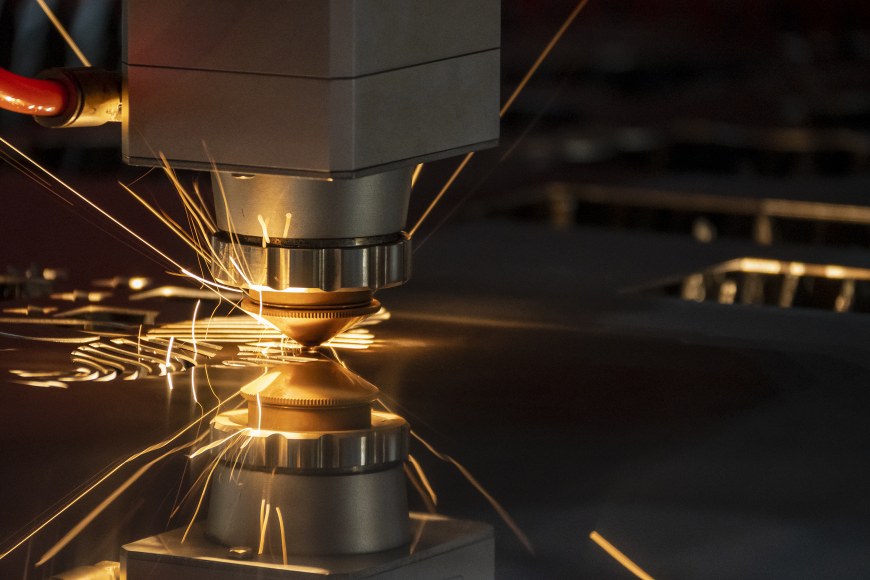
A 5-axis system allows the laser head to approach the material from multiple angles. Instead of being restricted to cuts that are perpendicular to the tube surface, fabricators can produce bevels, angled profiles, and complex geometries within the same operation.
For workshop teams, that means fewer secondary processes.
For designers, it means greater freedom to develop components based on function rather than manufacturing limitations.
Many fabricators describe this as one of the biggest advantages of modern tube processing. The technology allows the manufacturing process to adapt to the design rather than forcing the design to adapt to the manufacturing process.
What Happens When Multiple Processes Become One
Fabrication efficiency is often discussed in terms of machine speed. While speed certainly matters, experienced workshop managers usually pay closer attention to workflow.
A part that moves through four different workstations is rarely as efficient as a part that moves through one.
Traditional fabrication methods often involve a sequence of cutting, drilling, coping, machining, marking, and weld preparation. Each transfer requires handling, setup, inspection, and coordination.
When many of those operations can be completed during a single laser cutting cycle, the entire workflow becomes simpler.
There is less handling. Less waiting. Less opportunity for errors to creep into the process.
This consistency becomes particularly valuable on larger production runs where even small variations can create problems during assembly.
The benefits are equally noticeable for custom projects, where reducing fabrication complexity can help keep lead times under control.
Real-World Applications Where Complex Tube Geometry Matters
The value of 5-axis tube laser cutting becomes much easier to appreciate when looking at how it is used in practice.
In structural steel fabrication, connection accuracy can influence everything from assembly speed to weld quality. Components that arrive with precisely cut profiles are easier to position and often require less adjustment on site.
Mining equipment presents a different challenge. Heavy-duty machinery frequently incorporates tubular structures designed to withstand harsh operating conditions. These components often involve complex joining points that benefit from precise cutting and consistent repeatability.
Transport manufacturers face their own demands. Trailer frames, vehicle components, and specialised transport equipment require strong, reliable assemblies that can be produced efficiently. Accurate tube processing helps manufacturers maintain consistency across production runs while reducing unnecessary fabrication steps.
Architectural fabrication offers another perspective. Designers increasingly incorporate exposed steelwork into commercial buildings, public spaces, and residential projects. In these applications, visual appearance matters just as much as structural performance. Clean, precise cuts can help achieve the level of finish that architects and clients expect.
Why Designers Are Taking Advantage of Advanced Tube Processing
Not every benefit of 5-axis tube laser cutting is found on the workshop floor.
Design teams are discovering that advanced tube processing allows them to explore ideas that may have been dismissed in the past.
A more complex joint detail may improve structural performance. A customised tube profile may reduce overall material usage. An innovative connection method may simplify assembly during installation.
Historically, some of these ideas would have been abandoned because they were too difficult or expensive to manufacture.
Modern tube processing changes that calculation.
Designers can spend more time focusing on performance, functionality, and efficiency rather than working around production limitations.
This is particularly valuable during prototyping, where multiple design iterations may be required before a final solution is approved.
Design Considerations Before Sending a Drawing to Production
Advanced technology does not eliminate the importance of good design practices.
Successful projects still depend on clear communication between engineers, designers, and fabrication teams.
Material selection remains an important consideration. Different metals respond differently during processing, and project requirements often influence which material is most appropriate.
Tube profile selection is equally important. Round, square, rectangular, and custom profiles all present different design opportunities.
Accurate CAD files can also make a significant difference. The more clearly a design is defined, the easier it becomes to achieve the intended outcome during production.
Many experienced fabricators recommend involving manufacturing specialists early in the design process. A brief discussion before drawings are finalised can often identify opportunities to simplify production without compromising performance.
Looking Ahead
Manufacturing technology has always evolved in response to practical challenges. Workshops need better accuracy. Engineers need more flexibility. Clients expect shorter lead times and higher quality standards.
Five-axis tube laser cutting addresses all three demands.
What makes the technology particularly interesting is that its greatest value is not simply speed or automation. Its real strength lies in removing limitations that have shaped fabrication decisions for decades.
When engineers are free to design the component they actually want, rather than the component that is easiest to manufacture, better outcomes often follow.
As digital design tools, automation, and advanced manufacturing continue to develop, the gap between concept and production is becoming smaller. Fabricators who embrace these capabilities are finding new ways to improve efficiency while delivering increasingly sophisticated projects.
For an industry that has always balanced craftsmanship with innovation, that is a significant step forward.
Frequently Asked Questions
What is 5-axis tube laser cutting?
It is a manufacturing process that allows a laser cutting head to move across multiple axes, enabling angled cuts, bevels, notches, and complex geometries in metal tubing.
How does 5-axis tube laser cutting differ from conventional tube cutting?
Traditional methods often require several machines and multiple setups. A 5-axis system can perform many of these operations during a single process, improving efficiency and consistency.
What industries commonly use tube laser cutting?
Construction, mining, transport, agriculture, manufacturing, and architectural metalwork all regularly use tube laser cutting for precision components and assemblies.
Can tube laser cutting improve weld preparation?
Yes. Bevelled edges and accurately prepared joint profiles can often be incorporated directly into the cutting process, reducing additional preparation work.
Is tube laser cutting suitable for custom projects?
Absolutely. It is commonly used for both one-off fabrication projects and high-volume production runs.
What materials can be processed using tube laser cutting?
Steel, stainless steel, aluminium, and various other metals can often be processed depending on the equipment and project requirements.
Does 5-axis cutting improve production efficiency?
In many cases, yes. Combining multiple fabrication steps into a single operation can reduce handling, setup time, and production bottlenecks.
Why is tube laser cutting becoming more popular?
Manufacturers are under increasing pressure to improve accuracy, reduce lead times, and support more complex designs. Tube laser cutting helps address all three challenges.