Why Bangladesh’s Tire Demand Is Gaining Steady Momentum
Bangladesh’s tire demand is expanding steadily due to rising vehicle ownership, strong aftermarket replacement needs, infrastructure development, and growing radial tire adoption across passenger and commercial vehicle segments.
 kylejeminson
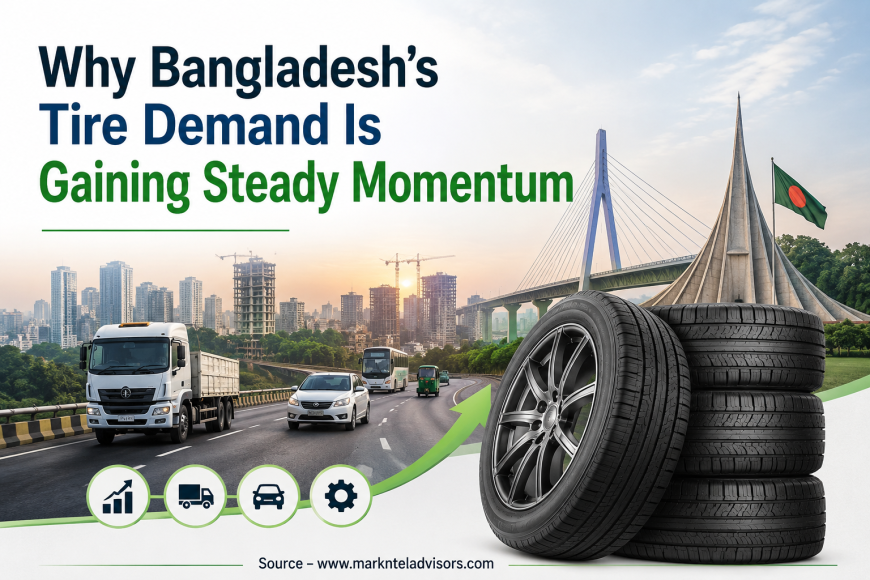
Bangladesh’s tire industry is moving through a gradual expansion phase, supported by rising vehicle use, replacement demand, and transport infrastructure development. The Bangladesh Tire Market was valued at USD 0.20 billion in 2025 and is projected to reach USD 0.31 billion by 2032, growing at a CAGR of 5.10% during 2026–2032, according to this Bangladesh tire industry report.
Vehicle Ownership Is Expanding Tire Consumption
Rising vehicle ownership is one of the strongest demand factors. Bangladesh had nearly 6.26 million registered vehicles by 2024, including around 4.58 million motorcycles, as referenced in the study. Motorcycles remain central to daily mobility because they are affordable, fuel-efficient, and practical for congested urban roads and semi-urban routes.
This expanding vehicle base directly strengthens replacement tire demand. Every motorcycle, passenger car, bus, truck, and light commercial vehicle requires periodic tire changes due to road wear, load pressure, and safety requirements. The BRTA service portal also shows the formal role of vehicle registration and related road services in Bangladesh’s transport ecosystem.
Aftermarket Demand Remains the Core Revenue Base
The aftermarket segment dominates the Bangladesh tire industry with nearly 79% share. This reflects the high frequency of tire replacement compared to OEM demand. Heavy daily use, uneven roads, freight movement, and long-distance commuting increase tire wear, making replacement demand more stable than new vehicle-linked demand.
For companies and distributors, aftermarket demand creates recurring revenue opportunities across multi-brand stores, exclusive outlets, and direct sales channels. Detailed insights can be found in the Bangladesh tire market report, which highlights replacement cycles as a major pillar of industry growth.
Infrastructure Development Is Supporting Mobility
Bangladesh’s road and logistics infrastructure development is also influencing tire consumption. The World Bank approved USD 650 million to support the Bay Terminal deep seaport, aimed at improving trade competitiveness and reducing import-export costs through better port efficiency. Stronger logistics networks usually increase commercial vehicle utilization and related tire replacement needs.
Road safety and transport modernization are also becoming policy priorities. The World Bank-supported Bangladesh Road Safety Project includes road safety engineering treatments, commercial driver training, emergency response support, and enforcement improvements. Such initiatives can gradually increase demand for better-quality tires, especially in commercial transport fleets.
Passenger Cars Lead by Vehicle Type
Passenger cars account for nearly 30% share by vehicle type. Urbanization, rising private mobility needs, and increasing commuting activity in cities such as Dhaka and Chattogram are supporting this segment. Consumers are also becoming more attentive to durability, grip, and fuel-efficiency performance, especially as travel distances increase.
The segment benefits from both OEM and aftermarket sales, but replacement demand remains more important. Ride-sharing, private commuting, and frequent city travel increase tire wear. As a result, passenger car tires continue to hold a strong position within Bangladesh’s broader vehicle tire demand structure.
Radial Tires Are Gaining Relevance
A key trend is the shift toward radial tires across commercial fleets. Radial tires offer better heat dissipation, longer life, improved road grip, and lower rolling resistance compared to conventional bias tires. These benefits are becoming more relevant as Bangladesh’s freight and intercity transport activity expands.
Local production is also beginning to reflect this shift. In 2025, Jamuna Tire & Rubber Industries introduced locally manufactured heavy-duty radial tires for truck and bus applications. According to the Bangladesh tire market growth forecast, radial adoption is expected to support technology upgrading and fleet modernization.
Import Dependency Creates Local Manufacturing Potential
Bangladesh remains highly dependent on imported tires, with imports meeting nearly 90% of annual tire requirements. Passenger car radial tires are particularly import-driven, while domestic manufacturers mainly focus on bias tires for commercial and two-wheeler categories. This creates exposure to foreign exchange pressure, freight costs, and global supply chain disruptions.
At the same time, import dependence opens a pathway for domestic production expansion. Meghna Innova Rubber Company announced investment plans in 2024 to expand tire manufacturing capacity in Tangail, with emphasis on truck and bus tires. This localization trend can improve availability and reduce supply-side vulnerability over time.
Competitive Landscape Remains Fragmented
The Bangladesh tire industry is moderately fragmented, with domestic and international companies competing across passenger, commercial, and two-wheeler categories. The top five companies together account for nearly 50% share. Major participants include Bridgestone, Goodyear Tire & Rubber Company, Continental, Yokohama, Michelin, Hankook, CEAT Limited, MRF Tyres, Gazi Tyres, and Apollo Tyres Limited.
Overall, Bangladesh’s tire demand is being shaped by vehicle parc growth, strong aftermarket replacement cycles, commercial fleet activity, radial tire adoption, and domestic manufacturing expansion. While import dependency remains a challenge, infrastructure development and rising mobility needs continue to support steady long-term industry growth.