Why Automotive Radar Is Shaping Safer Mobility
Explore how automotive radar improves ADAS, vehicle safety, and autonomous driving with reliable sensing in all weather conditions.
 johnryan01
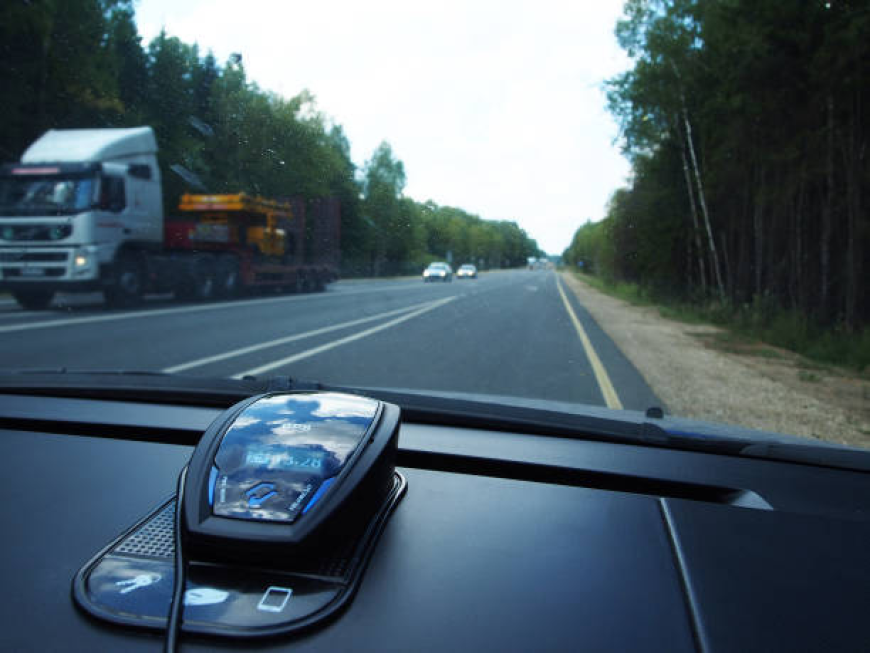
Automotive radar has become one of the most important sensing technologies in modern vehicles. As automakers continue integrating advanced safety systems and automated driving capabilities, radar sensors are playing a crucial role in helping vehicles detect surrounding objects, measure distance, and respond to changing road conditions. Unlike optical sensors, radar maintains reliable performance in challenging environments such as rain, fog, darkness, and dust, making it an essential component of next-generation vehicle safety.
The growing adoption of advanced driver assistance systems (ADAS) has significantly increased demand for intelligent sensing technologies. A recent analysis of automotive sensing technologies highlights how manufacturers are increasingly investing in radar-enabled solutions to improve vehicle awareness while meeting evolving safety expectations. As regulations and consumer preferences continue shifting toward safer transportation, radar technology is becoming a standard feature across multiple vehicle categories.
Unlike cameras that rely heavily on visibility, automotive radar transmits radio waves that detect nearby vehicles, pedestrians, cyclists, and roadside obstacles regardless of lighting conditions. These capabilities allow vehicles to continuously monitor their surroundings and support driver decision-making in both urban traffic and highway environments. The technology also complements cameras and LiDAR, creating a more comprehensive perception system for assisted and autonomous driving applications.
How Automotive Radar Works
Automotive radar systems emit electromagnetic waves that reflect off surrounding objects. By measuring the time required for the reflected signal to return, the system accurately determines the distance, speed, and direction of nearby objects. Modern radar sensors can simultaneously monitor multiple targets while distinguishing moving vehicles from stationary obstacles, enabling precise environmental awareness.
Continuous improvements in signal processing, higher-frequency radar bands, and artificial intelligence have enhanced object detection accuracy while reducing interference. These advancements enable radar systems to recognize increasingly complex traffic situations and provide more reliable information to vehicle control systems.
Key Applications in Modern Vehicles
Automotive radar supports a wide range of intelligent safety features that drivers increasingly expect in passenger and commercial vehicles. These applications improve both driver convenience and road safety by continuously monitoring surrounding traffic.
- Adaptive Cruise Control (ACC)
- Automatic Emergency Braking (AEB)
- Forward Collision Warning
- Blind Spot Detection
- Rear Cross Traffic Alert
- Lane Change Assistance
- Parking Assistance Systems
- Highway Driving Assistance
As software algorithms become more sophisticated, radar sensors are expected to perform increasingly complex perception tasks that were previously dependent on multiple sensing technologies.
Why Automakers Are Investing in Radar Technology
Several industry developments continue driving radar adoption. Governments across many countries are encouraging or mandating advanced safety features that rely on accurate environmental sensing. At the same time, consumers increasingly consider driver assistance technologies when purchasing new vehicles. These factors have encouraged manufacturers to integrate multiple radar sensors throughout vehicles to provide wider coverage and improved detection accuracy.
The rapid expansion of electric vehicles has also created new opportunities for radar integration. Since many electric vehicle platforms are designed with advanced electronic architectures, radar systems can be incorporated more efficiently alongside cameras, ultrasonic sensors, and software-defined vehicle platforms.
Emerging Technology Trends
Several innovations are transforming automotive radar capabilities. High-resolution imaging radar is enabling more detailed object classification, while artificial intelligence is improving object recognition and reducing false detections. Sensor fusion techniques combine radar data with cameras and LiDAR to create a more accurate understanding of the vehicle's surroundings.
Researchers are also working to improve radar performance in dense traffic environments where multiple radar-equipped vehicles operate simultaneously. Advanced signal processing techniques, interference mitigation, and machine learning algorithms are expected to further improve detection reliability as autonomous driving technologies continue evolving.
Challenges That Remain
Despite significant progress, automotive radar still faces technical challenges. Detecting small objects with high precision, minimizing signal interference, and accurately classifying complex road scenarios require continuous hardware and software improvements. Integrating radar with other sensing technologies while maintaining cost efficiency also remains an important consideration for manufacturers seeking large-scale deployment.
Another challenge involves balancing performance with affordability. Premium vehicles often feature multiple radar units providing 360-degree coverage, while entry-level vehicles typically include fewer sensors. Continued innovation and economies of scale are expected to make advanced radar systems more accessible across broader vehicle segments over time.
Looking Ahead
Automotive radar is expected to remain a foundational technology for future mobility. As driver assistance systems become more capable and autonomous driving technologies mature, reliable environmental sensing will become increasingly important. Radar's ability to deliver dependable performance under diverse weather and lighting conditions positions it as a critical element within intelligent transportation systems.
Future developments will likely focus on higher-resolution sensing, improved software intelligence, enhanced sensor fusion, and broader deployment across vehicle categories. Rather than replacing other sensing technologies, automotive radar will continue working alongside cameras and LiDAR to create safer, more reliable, and increasingly intelligent vehicles capable of navigating complex real-world driving environments.