Saudi Saber Certificate: Your Gateway to KSA’s Market
The SABER Certification Platform is Saudi Arabia's online conformity assessment system developed by the Saudi Standards, Metrology and Quality Organization (SASO). It digitizes the certification process for imported and locally manufactured products, ensuring they comply with applicable Saudi technical regulations before reaching consumers. The platform simplifies product registration, document submission, conformity assessments, and certificate issuance while improving transparency and reducing paperwork. Today, SABER has become a mandatory part of Saudi Arabia's import compliance framework.
 riazaljameel
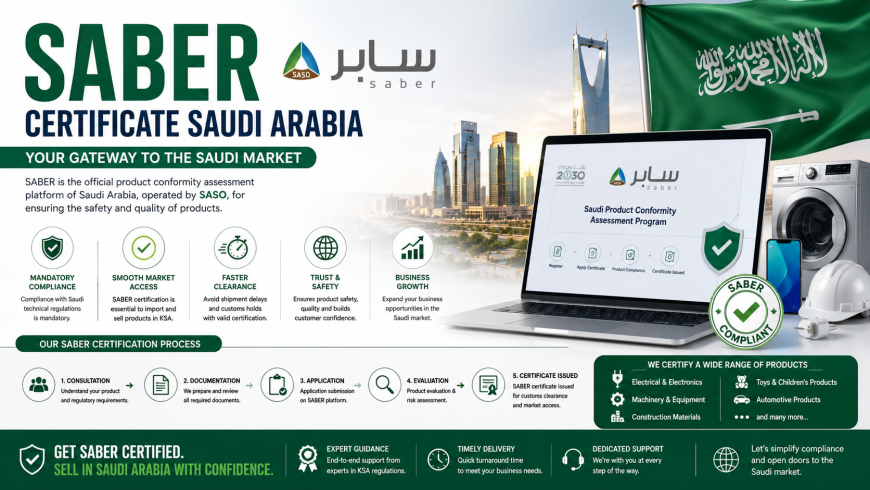
Expanding into Saudi Arabia presents tremendous opportunities for manufacturers, exporters, and importers, but success begins with regulatory compliance. The saber certification platform plays a crucial role in helping businesses meet Saudi product conformity requirements before goods enter the Kingdom. Through the SABER system, companies can register products, obtain Product Certificates of Conformity (PCoC), secure Shipment Certificates of Conformity (SCoC), and comply with SASO technical regulations. Whether you're shipping consumer goods, industrial equipment, or electrical products, understanding the SABER certification platform and its associated compliance process is essential for smooth customs clearance and uninterrupted access to the Saudi market.
What Is the SABER Certification Platform?
The SABER Certification Platform is Saudi Arabia's online conformity assessment system developed by the Saudi Standards, Metrology and Quality Organization (SASO). It digitizes the certification process for imported and locally manufactured products, ensuring they comply with applicable Saudi technical regulations before reaching consumers.
The platform simplifies product registration, document submission, conformity assessments, and certificate issuance while improving transparency and reducing paperwork.
Today, SABER has become a mandatory part of Saudi Arabia's import compliance framework.
Why the SABER Certificate Is Important
The Saudi government introduced the SABER system to improve product quality, consumer safety, and regulatory compliance.
Obtaining a SABER certificate provides several advantages:
-
Faster customs clearance
-
Compliance with Saudi regulations
-
Reduced shipment delays
-
Increased buyer confidence
-
Improved market credibility
-
Lower risk of customs rejection
-
Easier access to the Saudi market
Without proper certification, many regulated products cannot legally enter Saudi Arabia.
How the SABER Certification Platform Works
The platform follows a structured digital workflow that allows importers and manufacturers to complete certification efficiently.
Step 1: Product Registration
The importer first registers the product on the SABER platform by providing information such as:
-
Product description
-
HS code
-
Brand name
-
Manufacturer details
-
Country of origin
-
Product category
Correct product classification is essential because it determines the applicable Saudi technical regulations.
Step 2: Determine Applicable Technical Regulations
Each product is evaluated against relevant SASO technical regulations.
Examples include:
-
Electrical products
-
Toys
-
Construction materials
-
Automotive products
-
Chemicals
-
Personal protective equipment
-
Household appliances
Different regulations require different conformity assessment procedures.
Step 3: Select an Approved Certification Body
The importer chooses an accredited Certification Body authorized to evaluate the product.
The Certification Body reviews:
-
Technical documents
-
Product specifications
-
Test reports
-
Compliance evidence
Additional testing may be requested if necessary.
Step 4: Obtain the Product Certificate of Conformity (PCoC)
Once compliance is verified, the Certification Body issues the Product Certificate of Conformity.
This certificate:
-
Is generally valid for one year
-
Covers a specific product
-
Allows multiple shipments during its validity period
Step 5: Apply for the Shipment Certificate (SCoC)
Before each shipment enters Saudi Arabia, the importer applies for a Shipment Certificate of Conformity.
This certificate confirms that the shipment matches the previously approved product registration.
Every shipment requires its own Shipment Certificate.
Types of SABER Certificates
The SABER platform issues two primary certificates.
Product Certificate of Conformity (PCoC)
The Product Certificate confirms that a product complies with Saudi technical regulations.
It remains valid for one year and is linked to a specific product rather than an individual shipment.
Shipment Certificate of Conformity (SCoC)
The Shipment Certificate is issued for every shipment imported into Saudi Arabia.
Customs authorities verify this certificate before allowing goods to enter the country.
Who Needs SABER Certification?
SABER certification applies to various businesses involved in importing products into Saudi Arabia.
These include:
-
Manufacturers
-
Exporters
-
Saudi importers
-
Trading companies
-
Distributors
-
Brand owners
-
International suppliers
Businesses shipping regulated products must complete the SABER process before customs clearance.
Products Covered by the SABER System
Thousands of products fall under SABER regulations.
Examples include:
-
Electrical appliances
-
Lighting products
-
Electronic devices
-
Power tools
-
Construction materials
-
Furniture
-
Children's toys
-
Automotive components
-
Textile products
-
Cosmetics (where applicable)
-
Industrial equipment
-
Plastic products
-
Kitchen appliances
Each category follows its own technical regulations and conformity assessment requirements.
Documents Required for SABER Registration
Successful certification depends on accurate documentation.
Commonly required documents include:
-
Commercial invoice
-
Product specifications
-
Product images
-
User manuals
-
Manufacturer declaration
-
Test reports
-
ISO certificates (where applicable)
-
Packaging details
-
Country of origin information
Submitting complete documentation helps avoid delays.
Benefits of Using the SABER Certification Platform
The SABER platform offers significant advantages over traditional paper-based certification systems.
Faster Processing
Digital applications reduce paperwork and speed up approvals.
Improved Transparency
Applicants can track certification progress online and monitor application status.
Better Regulatory Compliance
The platform ensures products meet the latest Saudi technical regulations before shipment.
Reduced Customs Delays
Certified products move through customs more efficiently because compliance has already been verified.
Stronger Consumer Confidence
Products certified through SABER demonstrate adherence to recognized safety and quality standards, helping businesses build trust with customers.
Common Challenges Businesses Face
Although the platform simplifies certification, companies still encounter several common issues.
Incorrect Product Classification
Choosing the wrong HS code may result in incorrect regulatory requirements and application delays.
Incomplete Documentation
Missing technical documents often cause applications to be rejected or placed on hold.
Outdated Test Reports
Older laboratory reports may not satisfy current Saudi technical regulations.
Late Applications
Waiting until goods are ready for shipment often leads to customs delays and additional storage charges.
Choosing the Wrong Certification Body
Working with an inexperienced or unsuitable certification provider can slow the approval process.
Best Practices for Successful SABER Certification
Businesses can improve certification success by following several best practices.
Register Products Early
Begin the registration process well before shipment planning.
Verify Product Classification
Ensure the correct HS code and product category are selected.
Maintain Complete Technical Files
Organize all supporting documentation before submitting the application.
Monitor Regulatory Updates
Saudi technical regulations evolve regularly. Staying informed helps prevent compliance issues.
Work with Experienced Compliance Specialists
Professional guidance can simplify the certification process and reduce costly mistakes, especially for first-time exporters.
How SABER Supports Saudi Vision 2030
The SABER Certification Platform contributes to Saudi Arabia's Vision 2030 by modernizing trade procedures and improving product quality.
It helps achieve several national objectives, including:
-
Digital transformation
-
Consumer protection
-
International trade facilitation
-
Improved product safety
-
Greater regulatory transparency
-
Enhanced market competitiveness
These improvements create a more efficient environment for both domestic and international businesses.
Why Businesses Choose SABER Certification
Companies that successfully complete SABER certification enjoy multiple long-term benefits.
These include:
-
Reliable market access
-
Simplified customs procedures
-
Better compliance management
-
Reduced shipment disruptions
-
Stronger relationships with Saudi customers
-
Increased competitiveness in the Gulf region
For businesses planning long-term operations in Saudi Arabia, certification becomes an important investment rather than simply a regulatory requirement.
Final Thoughts
The saber certification platform serves as the foundation of Saudi Arabia's modern product compliance system. By enabling digital product registration, conformity assessment, and certificate issuance, it simplifies the import process while ensuring products meet Saudi safety and quality standards. Businesses that understand the SABER process, prepare accurate documentation, and comply with applicable technical regulations can enjoy faster customs clearance, fewer shipment delays, and seamless access to one of the Middle East's fastest-growing markets. Whether you're a first-time exporter or an established global supplier, obtaining a Saudi SABER certificate is a crucial step toward building a successful and compliant presence in the Kingdom.